Brain Health · Complete Guide

Brain health supplements: a complete guide

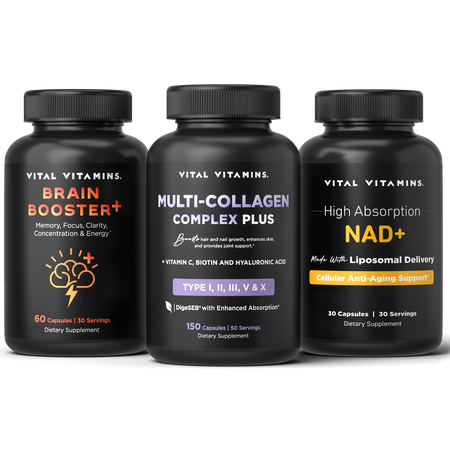
Brain health supplements are daily formulas built from vitamins, plant extracts, and amino acid compounds studied for their roles in memory, focus, and mental clarity.* We formulate Brain Booster+ around five targeted blends, so we've spent years digging into which ingredients have real research behind them, and which are mostly marketing. This guide walks through what the science says, what to look for on a label, and how to build brain support into a daily routine.

What are brain health supplements?

Brain health supplements are dietary formulas designed to support cognitive functions like memory, focus, and mental clarity, typically through blends of vitamins, plant extracts, and amino acid compounds rather than a single ingredient.* They're regulated as dietary supplements, not drugs, which means they're built to support normal brain function and not to diagnose, treat, or cure any brain-related condition.

The category spans a wide range, from single-ingredient capsules (just Ginkgo biloba, for example) to multi-blend formulas that combine several researched ingredients around a specific goal, like memory, focus, or reducing mental fatigue. Brain Booster+ falls into the second category: five blends, each built around a distinct cognitive goal, plus a B-vitamin and choline base.

What ingredients should you look for in a brain health supplement?

Look for ingredients with actual human clinical research behind them — not just cell studies or animal models — and pay attention to whether the study used a dose similar to what's in the product you're considering. Here's what the research shows for the ingredient categories most commonly used in brain health formulas, several of which appear in Brain Booster+'s blends.

Bacopa monnieri

An Ayurvedic herb long used in traditional Indian medicine to support memory and learning that has one of the more consistent research records in this category. In a 2001 randomized, placebo-controlled trial, healthy adults who took a Bacopa monnieri extract daily for 12 weeks showed improved learning rate and memory consolidation compared with placebo, with the strongest effects showing up at the 12-week mark rather than earlier [1] — a good early signal that Bacopa's benefits build gradually rather than appearing overnight.

Rhodiola rosea

An adaptogen (an herb studied for helping the body respond to physical and mental stress) frequently used for mental fatigue. In a 2000 double-blind, placebo-controlled pilot study, students who took a low, repeated dose of Rhodiola rosea extract during a stressful exam period reported less mental fatigue and better overall well-being than students on placebo [2].

Ginkgo biloba (Ginkgo Leaf)

One of the most studied plant extracts for cognitive support. In a 2000 randomized, placebo-controlled trial, cognitively healthy adults over age 55 who took a standardized Ginkgo biloba extract for six weeks showed significantly faster performance on a speed-of-processing task compared with placebo, along with a trend toward improved self-rated memory [3].

Lion's Mane mushroom (Hericium erinaceus)

One of the more talked-about ingredients in the nootropic space — a broad term for compounds studied for their effects on mental performance. In a 2009 double-blind, placebo-controlled trial, older adults with mild cognitive impairment who took Lion's Mane for 16 weeks scored significantly higher on a cognitive function scale than the placebo group, though their scores declined again after they stopped supplementing [4] — a useful reminder that consistency matters more than any single dose.

Vitamin B12 and folate (vitamin B9)

Foundational nutrients for nervous system function, and their research comes with an important nuance. A 2012 review of vitamin B12 research found that correcting a true B12 deficiency can meaningfully improve cognition in people who were deficient, but supplementing B12 doesn't reliably improve cognitive performance in people whose B12 levels are already normal [5]. In plain terms: B vitamins support the brain's baseline nutritional needs, but they're not a cognitive enhancer for someone who isn't deficient.

Acetyl-L-carnitine

A form of the amino acid compound carnitine, involved in cellular energy production that has research specifically in older adults dealing with fatigue. In a randomized trial, elderly adults with fatigue who took acetyl-L-carnitine showed improvements in physical and mental fatigue scores, compared with a control group [6].

Grape seed extract

Supplies concentrated proanthocyanidins (a class of plant antioxidant compounds called polyphenols). A 2020 randomized, placebo-controlled trial in healthy young adults found that a 400 mg grape seed polyphenol extract improved reaction time shortly after dosing and psychomotor skill after 12 weeks of daily use — but the researchers were candid that it did not consistently improve every cognitive measure they tested, and younger, already-healthy adults may simply be less responsive than older adults [7].

Blueberry and bilberry extracts

The antioxidant pigments that give berries their deep color and are rich in anthocyanin. In a small 2010 pilot study, older adults with early memory changes who drank wild blueberry juice daily for 12 weeks improved on paired-associate learning and word-list recall tests compared with their own baseline [8]. It was a preliminary study with a small sample, but it helped establish the basis for the larger blueberry-and-memory research that's followed since.

What's inside Brain Booster+?

Brain Booster+ is a caffeine-free, sugar-free, gluten-free, vegan capsule built around five targeted blends, plus a B-vitamin and choline base. We designed it this way because different cognitive goals — memory, focus, mental clarity, concentration, and cellular energy for brain cells — respond to different ingredient categories, so a single-ingredient formula couldn't cover the full picture.

Memory Blend (140 mg)

Ginkgo Leaf [3], Rhodiola Root Extract [2], Soy Bean Extract standardized to 20% Phosphatidylserine (a fat that's a structural building block of brain cell membranes), and Lion's Mane Mushroom [4] — this blend is formulated to support better memory.

Focus Blend (145 mg)

Grape Seed Extract standardized to 95% Proanthocyanidins [7], Bacopa Extract from the whole plant [1], and Lion's Mane [4] — formulated to promote sharper focus.

Clarity Blend (12 mg)

Rhodiola Root Extract [2], Lion's Mane [4], and Huperzine A (a compound derived from Chinese club moss) — formulated to help ease brain fog and support mental clarity[1].

Concentration Blend (210 mg)

DMAE (dimethylaminoethanol, a compound related to choline), Lion's Mane [4], Bilberry Fruit [8], Rhodiola [2], Phosphatidylcholine from Soy Lecithin (a source of choline, a nutrient the body uses to build acetylcholine, a chemical messenger involved in memory), and Blueberry Fruit Extract [8] — formulated to enhance focus and concentration.

Neuro Blend (175 mg)

N-Acetyl-L-Tyrosine (a modified form of the amino acid tyrosine), Acetyl-L-Carnitine HCl [6], Alpha-GPC (a choline compound the brain can use to build acetylcholine), and Artichoke Leaf Extract standardized to 5% Cynarin — formulated to support neuroenergetics (how brain cells generate and use energy).

Beyond these five blends, each serving of Brain Booster+ provides Vitamin B6 (5 mg), Folate (680 mcg DFE), Vitamin B12 (282 mcg) [5], Choline (73 mcg), and Magnesium as magnesium oxide (25 mg) — the foundational nutrients that support normal nervous system function.

When can you expect results from a brain health supplement?

Different ingredients act on different timelines, so we built Brain Booster+ around three general windows rather than promising one universal result date. Some effects are noticeable within days; others take weeks or to months of consistent use to show up.

In the near term (hours to a few days), ingredients like N-Acetyl-L-Tyrosine, Alpha-GPC, and Rhodiola are the ones most likely to give an early, subjective sense of clarity, focus, or alertness. In the short term (roughly one to two weeks), the B vitamins, choline, and adaptogens in the formula are more often supportive of memory support, concentration, and reduced mental fatigue. In the longer term (four to eight weeks and beyond), ingredients like Lion's Mane, Bacopa, folate, and vitamin B6 are the ones tied to sustained brain function support. This is also why we recommend using Brain Booster+ for three months or more before judging its full effect — the research behind several of its key ingredients, including Bacopa and Lion's Mane, shows the clearest results after weeks of consistent daily use, not after a single dose [1][4].

Brain fog is common — but a supplement alone won't fix it

Brain fog — the fuzzy, slowed-down feeling of struggling to think clearly, focus, or find words — usually has more than one cause, and no single capsule addresses all of them. Sleep debt, dehydration, chronic stress, blood sugar swings, and certain nutrient gaps can all contribute to brain fog, which means the most effective approach is almost always a combination of lifestyle changes and, where appropriate, targeted nutritional support.

Where a supplement can help is filling specific gaps: Brain Booster+'s Clarity Blend is formulated with Rhodiola, Lion's Mane, and Huperzine A specifically to help ease brain fog, and its B-vitamin base supports the nervous system nutrients that brain fog is sometimes linked to. However, a capsule alone cannot undo a bad night's sleep or a consistently stressful month. Supplements act as one supportive piece of a bigger picture, not the whole fix.

How do you choose the right brain health supplement?

The right brain health supplement matches its ingredients to the specific cognitive goal you're trying to support — memory, focus, mental clarity, or general nervous system nutrition — rather than promising to do everything for everyone. Here's the framework we use when we evaluate a formula, our own included.

  1. Identify your primary goal. Memory recall, staying focused during work, mental clarity and reduced brain fog, and long-term brain support are related but distinct goals, and different ingredients are suited to each.
  2. Check for clinically studied ingredients at reasonable doses. An ingredient showing up on a label means little if the dose is far below what was used in the research behind it.
  3. Look for third-party testing and manufacturing transparency. GMP compliance and third-party testing are basic signals that what's on the label is what's in the capsule.
  4. Match the format to your lifestyle. If you're sensitive to caffeine or take it earlier in the day already, a caffeine-free formula avoids compounding your intake.
  5. Give it a fair trial period. Because several of the best-studied ingredients in this category show their clearest effects after weeks of consistent use, judge a formula over three months, not three days.

Nootropics vs. brain health supplements: is there a difference?

"Nootropic" is a broad, descriptive term for any substance — natural or synthetic — studied for its effects on mental performance, while "brain health supplement" usually refers specifically to a dietary supplement formulated with nootropic ingredients. In practice, most brain health supplements, Brain Booster+ included, are built from nootropic ingredient categories: adaptogens, choline sources, amino acid compounds, and plant extracts studied for cognitive support.

You'll sometimes see "nootropic" used loosely to mean "smart drug" — a term that more accurately describes prescription stimulants or unregulated synthetic compounds, not dietary supplements. We use "nootropic" descriptively, the way the research community does, to talk about ingredient categories — not as a claim that any product functions like a prescription drug.

Who should be cautious with brain health supplements — or skip them entirely?

Anyone who is pregnant or breastfeeding, taking prescription medication (especially blood thinners, thyroid medication, or medication for a diagnosed neurological or psychiatric condition), or managing a diagnosed cognitive or mental health condition should talk to a doctor before adding a brain health supplement, including Brain Booster+, to their routine. Supplements in this category are formulated to support normal brain function in generally healthy adults — they are not designed, tested, or intended to treat ADHD, dementia, Alzheimer's disease, or any other diagnosed condition, and they should never replace a prescribed treatment plan.

Brain Booster+ is caffeine-free, which makes it a reasonable option for people who are sensitive to stimulants, but "caffeine-free" doesn't mean "risk-free for everyone." If you're new to any of the ingredient categories above, especially adaptogens like Rhodiola or choline compounds like Alpha-GPC, introducing one new supplement at a time makes it easier to notice how your body responds.

Frequently asked questions

Brain Booster+ is formulated as a daily supplement and is caffeine-free, sugar-free, gluten-free, and vegan. As with any supplement, check with a doctor first if you're pregnant, breastfeeding, taking prescription medication, or managing a diagnosed medical condition.

It varies by ingredient. Some people notice subjective clarity or alertness within days, thanks to ingredients like L-Tyrosine and Alpha-GPC. Memory- and concentration-related benefits tend to build over one to two weeks, and the fuller effects tied to Lion's Mane, Bacopa, and the B-vitamin base typically show up over four to eight weeks or more. We recommend a three-month trial for the clearest picture.

Brain Booster+ is caffeine-free, so it won't add to your caffeine intake if you also drink coffee or tea. If you're taking other supplements, especially anything with overlapping ingredients like choline sources or B vitamins, it's worth reviewing your total daily intake with a doctor or pharmacist to avoid unnecessary duplication.

No — brain fog usually has multiple contributing causes, including sleep, hydration, stress, and blood sugar swings, and a supplement addresses only part of that picture. Brain Booster+'s Clarity Blend is formulated to help ease brain fog as part of a broader routine, not as a standalone fix.

“Nootropic” is a broad, descriptive term for any substance studied for its effects on mental performance. “Brain health supplement” refers to a dietary supplement — like Brain Booster+ — formulated from nootropic ingredient categories such as adaptogens, choline sources, and amino acid compounds.

The science

Studies

Chronic effects of Bacopa monniera on cognitive function in healthy human subjects.

C Stough, et al. — Psychopharmacology (Berl)

View source

Ginkgo biloba EGb761 and neuropsychologic functioning of cognitively intact older adults

Mix JA, et al. — J Altern Complement Med

View source

Hericium erinaceus on mild cognitive impairment: a double-blind placebo-controlled clinical trial.

Mori K, et al. — Phytother Res

View source

Grape seed polyphenol extract and cognitive function in healthy young adults

Bell L, et al. — Nutr Neurosci

View source
View All Studies Show fewer

Blueberry supplementation improves memory in older adults

Krikorian R, et al. — J Agric Food Chem

View source

Cognitive impairment and vitamin B12: a review

Moore E, et al. — Int Psychogeriatr

View source

Effects of sleep deprivation on cognition

Killgore WD — Prog Brain Res

View source

Mild dehydration impairs cognitive performance and mood of men

Ganio MS, et al. — Br J Nutr

View source

Blood glucose influences memory and attention in young adults

Benton D, et al. — Neuropsychologia

View source

Rhodiola rosea SHR-5 on student fatigue during exams

Spasov AA, et al. — Phytomedicine

View source

Acetyl L-carnitine in elderly patients with fatigue

Malaguarnera M, et al. — Arch Gerontol Geriatr

View source

Circadian rhythms in cognitive performance: implications for neuropsychological assessment

Valdez P, et al. — ChronoPhysiology and Therapy

View source

The cortisol awakening response (CAR): Facts and future directions

Fries E, et al. — Int J Psychophysiol

View source

Caffeine effects on sleep taken 0, 3, or 6 hours before going to bed

Drake C, et al. — J Clin Sleep Med

View source

Dietary Supplements: What You Need to Know

NIH Office of Dietary Supplements — NIH ODS Fact Sheet for Consumers

View source

Cognitive Health and Older Adults

National Institute on Aging, NIH

View source

References

  1. Stough C, et al. Chronic effects of Bacopa monniera on cognitive function in healthy human subjects. Psychopharmacology (Berl). 2001;156(4):481-484.
  2. Spasov AA, et al. Rhodiola rosea SHR-5 in student fatigue during exams. Phytomedicine. 2000;7(2):85-89.
  3. Mix JA, Crews WD Jr. Ginkgo biloba EGb761 in cognitively intact older adults. J Altern Complement Med. 2000;6(3):219-229.
  4. Mori K, et al. Hericium erinaceus on mild cognitive impairment. Phytother Res. 2009;23(3):367-372.
  5. Moore E, et al. Cognitive impairment and vitamin B12: a review. Int Psychogeriatr. 2012;24(4):541-556.
  6. Malaguarnera M, et al. Acetyl L-carnitine in elderly patients with fatigue. Arch Gerontol Geriatr. 2008;46(2):181-190.
  7. Bell L, et al. Grape seed polyphenol extract and cognitive function in healthy young adults. Nutr Neurosci. 2022;25(1):54-63.
  8. Krikorian R, et al. Blueberry supplementation improves memory in older adults. J Agric Food Chem. 2010;58(7):3996-4000.

Ready to start?

Support your brain health routine with Brain Booster+

Brain Booster+ brings together five targeted blends — Memory, Focus, Clarity, Concentration, and Neuro — plus a B-vitamin and choline base, in a caffeine-free, sugar-free, gluten-free, vegan capsule. Take two capsules daily with a meal containing healthy fats, stay hydrated, and give it three months or more to see its fullest effect.

* These statements have not been evaluated by the Food and Drug Administration. This product is not intended to diagnose, treat, cure, or prevent any disease.