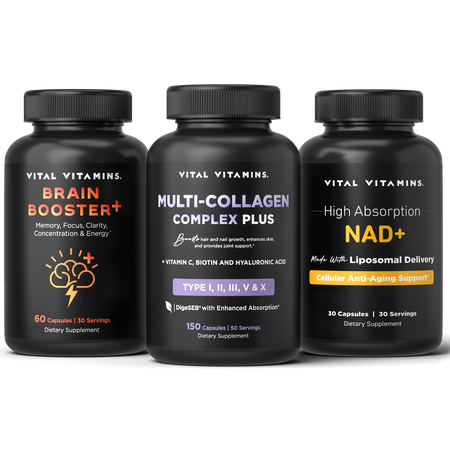

If you've searched "best nootropics for focus and memory," you've probably landed somewhere between a coffee ad and a research paper. The category now covers everything from a second cup of coffee to plant-based capsules to prescription stimulants used off-label, and most comparison lists don't draw a clear line between them. This article breaks down what a nootropic actually is, how natural ingredients differ from caffeine and other stimulants, what to check before buying one, and where a caffeine-free formula like Brain Booster+ fits into that decision.
What is a nootropic, exactly?
Short answer: A nootropic is any substance, natural or synthetic, used with the goal of supporting cognitive functions like focus, memory, and mental clarity. Natural nootropic ingredients (plant extracts, amino acids, specific nutrients) tend to work gradually and without the stimulant crash that comes with caffeine. Rather than chasing the strongest-sounding stack, evaluate any nootropic — including ours — by what's printed on the ingredient panel: individual dosages, sourcing, and what each ingredient is backed by.
A nootropic is any substance, natural or synthetic, used with the goal of supporting cognitive functions such as focus, memory, learning, or mental clarity. The term was coined in the 1970s to describe compounds meeting a fairly narrow set of criteria, but today it's used loosely to cover a wide range of things: caffeine, B vitamins, plant extracts, and even prescription stimulants taken off-label. It's worth separating those categories clearly. Dietary supplement nootropics, like the blends in Brain Booster+, are regulated as supplements, not drugs, and are formulated to support normal cognitive function in generally healthy adults. Dietary supplement nootropics are not intended to diagnose, treat, cure, or prevent any disease. "Smart drug" is a term sometimes used for prescription stimulants such as modafinil or off-label ADHD medications taken by healthy people hoping to enhance performance; that's a different regulatory and risk category entirely from a caffeine-free supplement, and this article focuses on the supplement side of that spectrum.
Natural nootropics work differently than caffeine
Natural nootropic ingredients and caffeine can both be marketed around "focus," but they get there through different mechanisms, and that difference shows up in how they feel to take. Caffeine is a central nervous system stimulant: it works by blocking adenosine receptors in the brain, reaches its peak level in your blood within about an hour, and its effects typically last four to six hours. Regular use can also lead to dependency, and stopping abruptly can bring on withdrawal symptoms like headache, drowsiness, and trouble concentrating [1]. Natural nootropic ingredients such as Bacopa monnieri, Ginkgo biloba, and lion's mane mushroom work through slower, non-stimulant pathways and are generally taken for weeks or months rather than for an immediate lift. Because Brain Booster+ contains zero caffeine, it's built for people who want memory and focus support without adding to a daily stimulant load they may already be carrying from coffee, tea, or energy drinks.
Not recommended: stacking multiple stimulants for an all-day focus push
Combining several caffeinated products such as coffee, energy drinks, pre-workout powder, and stimulant-based "focus" supplements to chase a longer or stronger effect isn't something we'd recommend. Most healthy adults can tolerate up to about 400 mg of caffeine a day (roughly four 8-ounce cups of coffee) without issue, but going above that or stacking several caffeinated sources without tracking the total is associated with restlessness, a fast heart rate, anxiety, dehydration, and dependency [1]. Anyone managing a sleep disorder, anxiety, migraines, high blood pressure, or an irregular heartbeat should be especially cautious about stimulant stacking and should talk with a healthcare provider before adding another one [1]. If you're already relying on caffeine to get through the day, a caffeine-free nootropic is a way to add support on top of that stack instead of adding to it.
How to evaluate any nootropic before you buy it
Judge a nootropic by what's printed on the label, not by what's promised on the front of the bottle. Start by checking whether each active ingredient is listed, or whether it's hidden inside an unlabeled "proprietary blend." From there, look at whether the ingredients included are ones with published human research behind them, rather than a long list of trendy names with no evidence attached. It also matters whether the formula is transparent about being caffeine-free or caffeine-containing, since that changes how it should fit around the rest of your daily stimulant intake, and whether the brand is specific about how long a formula typically needs to be used before you'd expect to notice anything, since most non-stimulant nootropic ingredients build gradually rather than working in one sitting. Finally, treat any product making disease-specific claims — promises to treat memory disorders, reverse cognitive decline, or manage a diagnosed condition — as a red flag, since a legitimate dietary supplement should describe what it may support, not what it can cure.
What we look for at VIV when evaluating a nootropic — including our own
Here’s what we look for when evaluating any nootropic, including our own: individually dosed blends, ingredients with human research behind them, and clear instructions on how to take the product and how long to give it.
Brain Booster+ is our caffeine-free, sugar-free, gluten-free vegan capsule, taken two per day, ideally with a source of healthy fat and adequate hydration, with most people needing three or more months of consistent use before evaluating results. It's organized into five labeled blends rather than one undifferentiated mix, which is deliberate: it lets us disclose what each blend is doing instead of asking you to trust a single unexplained list.
The Memory Blend (140 mg) combines Ginkgo Leaf, Rhodiola Root Extract, Soy Bean Extract standardized to 20% Phosphatidylserine, and Lion's Mane Mushroom. In a 2000 randomized trial, a standardized Ginkgo biloba extract significantly improved speed of processing, with a trend toward better self-rated memory, in cognitively healthy older adults [2].
The Focus Blend (145 mg) pairs Grape Seed Extract standardized to 95% proanthocyanidins (a class of plant antioxidant compounds) with whole-plant Bacopa Extract and Lion's Mane. In a 2001 randomized, placebo-controlled trial, healthy adults who took a Bacopa monnieri extract daily for 12 weeks showed improved learning rate and memory consolidation compared with placebo [3].
The Clarity Blend (12 mg) uses Rhodiola Root Extract, Lion's Mane, and Huperzine A, and is formulated to support mental clarity and ease the hard-to-concentrate feeling many people describe as brain fog. For a deeper look at what actually causes that feeling, see our article on brain fog causes and what actually helps.
The Concentration Blend (210 mg) combines DMAE, Lion's Mane, Bilberry Fruit, Rhodiola, Phosphatidylcholine from Soy Lecithin, and Blueberry Fruit Extract.
The Neuro Blend (175 mg) contains N-Acetyl-L-Tyrosine, Acetyl-L-Carnitine HCl, Alpha-GPC, and Artichoke Leaf Extract standardized to 5% Cynarin, and is formulated to support neuroenergetics — the metabolic energy processes that fuel activity inside brain cells.
Lion's Mane mushroom appears across four of the five blends, which reflects how much research attention this ingredient has drawn recently. In a 2009 double-blind, placebo-controlled clinical trial, adults with mild cognitive impairment who took a Lion's Mane (Hericium erinaceus) supplement for 16 weeks scored significantly better on cognitive function tests than the placebo group, though scores declined again after supplementation stopped [4]. Brain Booster+ also provides Vitamin B6, Folate, Vitamin B12, Choline, and Magnesium (as Magnesium Oxide), nutrients that support normal nervous system function as part of a complete formula rather than as the headline ingredients.
What Brain Booster+ doesn't do
Brain Booster+ is built to support memory, focus, and mental clarity over time — it is not a stimulant, an instant fix, or a substitute for sleep. Because it's caffeine-free, don't expect the immediate, jittery lift of a cup of coffee; the plant and nutrient blends inside it work gradually, which is why the label calls for at least three months of consistent daily use before judging results. It's also not intended to diagnose, treat, cure, or prevent any disease, including conditions that affect memory, attention, or focus. According to the National Institute on Aging, no vitamin or supplement is currently recommended for preventing cognitive decline, and factors like sleep, physical activity, blood pressure management, and diet play a larger, better-established role in long-term brain health than any single supplement [5]. Anyone managing a diagnosed condition affecting memory, attention, or focus should work with a healthcare provider on treatment — a supplement is meant to support a foundation that's already in place, not replace one. For guidance on fitting a formula like this into your day, see our guide on when to take brain health supplements, and for the fuller picture of how these ingredients fit into an overall regimen, see our complete guide to brain health supplements.