
Yes, if you want what each one delivers. Collagen supports skin structure, joints, hair and nails, and hyaluronic acid supports hydration and suppleness. Both have their own clinical research behind them, and there’s no interaction to manage. Take them together and give the pair twelve weeks.
We formulate both at Vital Vitamins, so we spend a lot of time looking at what each one actually delivers. Here’s how we’d think about it if you’re deciding whether to take one or both.
What each one does
Collagen and hyaluronic acid work on different parts of the same structure, which is why they pair so naturally.
Collagen is the scaffolding. It’s the protein that gives skin its firmness and holds connective tissue together. Hyaluronic acid is the water held in the spaces around that scaffolding. Your skin carries roughly 400 to 500 micrograms of hyaluronic acid per gram of tissue, and about half of all the hyaluronic acid in your body lives there. [1,2]
Vitamin C sits underneath both of them. Your body needs vitamin C to build collagen normally, which is why you’ll find it in well-built formulas on both sides of this pairing, including ours. [3]
What the research shows for collagen
Collagen with vitamin C has strong, measurable results for skin structure. In a 2024 randomized, double-blind, placebo-controlled study, 87 healthy women aged 40 to 65 took collagen with vitamin C daily for sixteen weeks. Their skin density improved by around 16% compared with placebo, alongside smoother texture and softer-looking lines. Nobody reported adverse effects. [4]
Skin density is the measurement that matters most here. It reflects the structural quality of the skin itself rather than how it looks on any given day, which makes it a meaningful result over four months.
What the research shows for hyaluronic acid
Hyaluronic acid has its own track record, and it’s strongest exactly where collagen’s isn’t. A 2025 analysis pooling seven randomized controlled trials found that daily hyaluronic acid improved skin hydration, elasticity, and the depth of fine lines compared with placebo. [5]
A 2025 trial of 150 healthy adults adds detail. Twelve weeks at 120 mg a day increased hydration and elasticity along with the measured thickness and density of the skin itself. [6] That hydration result is the reason to add hyaluronic acid to a routine that already has collagen in it.
So should you take both?
Take both if you want both sets of benefits, which is what most people who buy them together are after.
Collagen is the broader lever, covering skin structure, joint comfort, and hair and nails together. Hyaluronic acid is the specialist for hydration and suppleness. Each is worth taking on the strength of its own research, and there’s no interaction between them to manage. [4,5]
One thing we won’t claim is that the two multiply each other. We’re not aware of research showing that combining them produces more than each delivers on its own, so take both for the two sets of benefits rather than for a bonus effect.
What collagen brings beyond skin
Collagen’s reach is the reason it’s usually the first of the two that people buy. It’s the most abundant protein in your body, and it forms the structural framework in skin, joints, tendons, and bone.
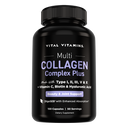
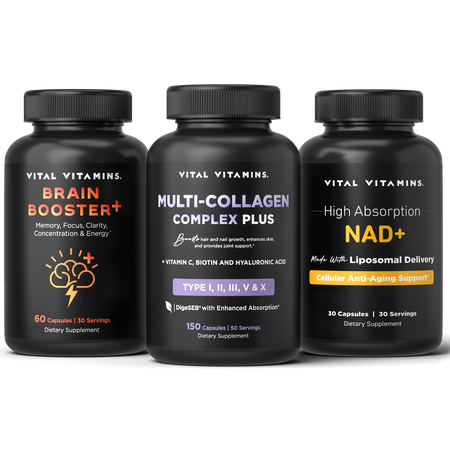
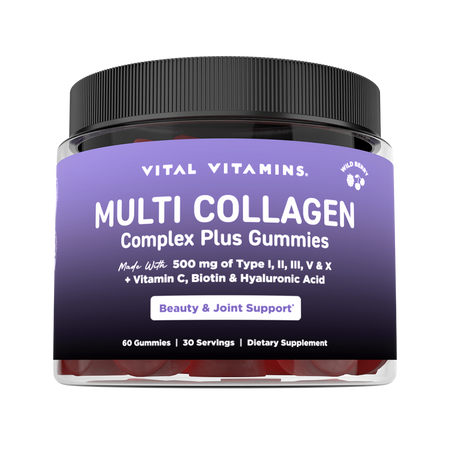
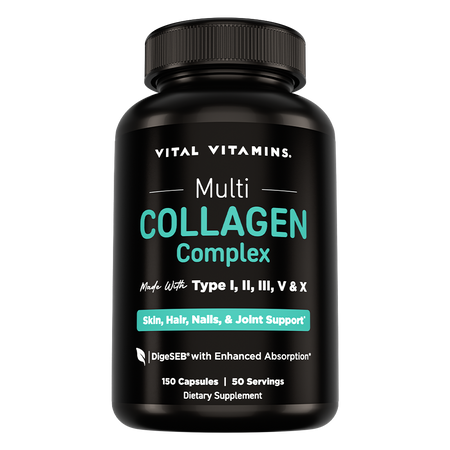
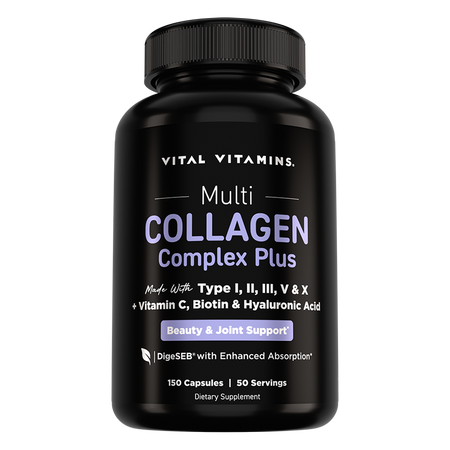
That breadth is why a collagen supplement gets described as whole-body support rather than a skin product. Our Multi Collagen Complex Plus delivers five collagen types, I, II, III, V and X, sourced from bovine, chicken, fish, and eggshell membrane. Different types concentrate in different tissues, which is the thinking behind a multi-collagen formula rather than a single-source one.
What hyaluronic acid brings that collagen doesn’t
Hydration is the gap hyaluronic acid fills, and it’s a real one. Collagen builds structure, but structure alone doesn’t hold water. Hyaluronic acid is the molecule that does, and it’s why skin can feel tight even when its underlying structure is in good shape.
That’s the practical case for adding it to a collagen routine. If your skin feels dry by mid-afternoon, or tight straight after washing, that’s a hydration signal rather than a structural one, and hyaluronic acid is the ingredient with direct evidence for it. [5,6]
How to decide, in one question
Ask yourself what you’d want to be different in three months.
If your answer covers skin, joints, hair and nails together, start with collagen. The 2024 trial showed collagen with vitamin C improving skin density, texture, and fine lines. [4] If your answer is specifically that your skin feels dry and looks flat, start with hyaluronic acid, where the hydration evidence sits. [5] If it’s both, take both.
Getting a full hyaluronic acid dose
If hydration is one of your goals, take hyaluronic acid as its own capsule rather than relying on the amount inside a collagen formula.
Multi Collagen Complex Plus includes hyaluronic acid in its 200 mg Glowing Beauty Complex, alongside MSM, hydrolyzed keratin, astaxanthin, L-glutathione, and alpha lipoic acid. It’s a strong beauty formula with a substantial 1,600 mg collagen dose across five types. The hyaluronic acid inside is one member of that blend, which is true of nearly every collagen product carrying hyaluronic acid on the front label. The trials showing clear hydration results used 60 to 120 mg of hyaluronic acid a day on its own. [6]
What to expect from each, and when
Collagen and hyaluronic acid run on similar timelines, which makes them easy to judge together. Give the pair twelve weeks and you’ll have a fair read on both.
Weeks 1 to 4. There isn’t much to see yet, and that’s normal. This is the stretch where most people quit, so it helps to know in advance that nothing happening yet isn’t the same as nothing working.
Weeks 4 to 8. Skin usually starts feeling different before it looks different. It feels less tight after washing and more comfortable through a dry afternoon. The hyaluronic acid trials measuring skin moisture generally found changes around the six-week mark. [6]
Weeks 8 to 16. Visible changes tend to land here: softer-looking fine lines, smoother texture, better bounce. The 2024 collagen trial ran sixteen weeks before measuring its improvements in skin density and texture. [4]
Individual results vary. A photo taken in the same light on day one is far more reliable than your memory of what your skin looked like three months ago.
How to stack them
There’s nothing to coordinate and no order to get right.
- Take the collagen supplement daily, either as capsules with a meal or as powder stirred into coffee, water, or a smoothie.
- Take the hyaluronic acid supplement daily with food and water, at the same time if that’s simplest.
- Give the pair a full twelve weeks before judging either one.
Which of our formats fits your routine
You already take collagen and want to add hydration. Add Hyaluronic Acid Capsules, which give you 200 mg of low molecular weight hyaluronic acid in one capsule a day. They’re vegan and gluten-free, and they’re the cleanest way to add a full dose to a routine you’ve already built.
You want hydration plus electrolytes and joint support in one serving. Hyaluronic Acid Hydration Complex carries the same 200 mg with electrolytes, coconut water powder, MSM, silica, L-taurine, L-proline, and vitamin C across a two-capsule daily serving.
You’re starting fresh and want one bottle. Multi Collagen Complex Plus gives you 1,600 mg of five collagen types, types I, II, III, V and X, sourced from bovine, chicken, fish and eggshell membrane, with biotin, vitamin C, and our Glowing Beauty Complex. Take three capsules once or twice daily, with 50 servings per bottle.
You’d rather drink it than swallow capsules. Multi Collagen Complex Peptides Powder stirs into coffee or water and pairs easily with a hyaluronic acid capsule alongside it.
All of these are available on our website, and the full skin, hair and nails collection shows how they sit alongside biotin and the rest of the range.*
*These statements have not been evaluated by the Food and Drug Administration. This product is not intended to diagnose, treat, cure, or prevent any disease.