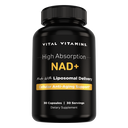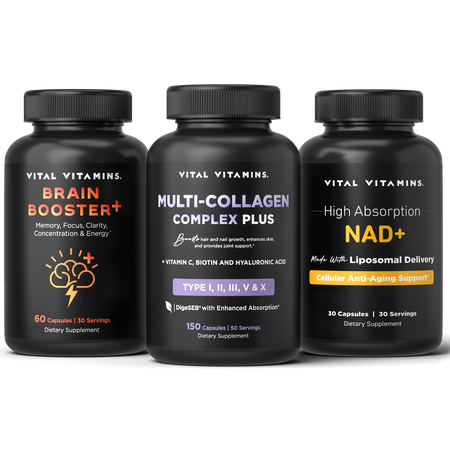


NAD+ (nicotinamide adenine dinucleotide) is a coenzyme found in every cell that helps convert food into usable energy and powers enzymes involved in DNA repair. NAD+ levels naturally decline with age. Precursor supplements like nicotinamide riboside have been shown to raise blood NAD+ levels in humans — though long-term benefit data is still emerging.
How does NAD+ power cellular energy?
NAD+ works as a shuttle in your mitochondria — the structures that generate ATP, the energy currency your muscles, brain, and organs run on. It picks up electrons released as nutrients are broken down and delivers them to the final steps of energy production. Without adequate NAD+, that assembly line slows. It also fuels sirtuins and PARP enzymes, proteins involved in DNA repair and healthy cellular aging. [1]
Why do NAD+ levels decline with age?
Production slows while consumption speeds up. In 2021, a review in Nature Reviews Molecular Cell Biology described how aging tissues both synthesize less NAD+ and burn through more of it as repair enzymes work harder. [1] That decline is one reason NAD+ has become a central focus of healthy-aging research — though scientists are still mapping exactly how much restoring NAD+ changes outcomes in people.
Can supplements actually raise NAD+?
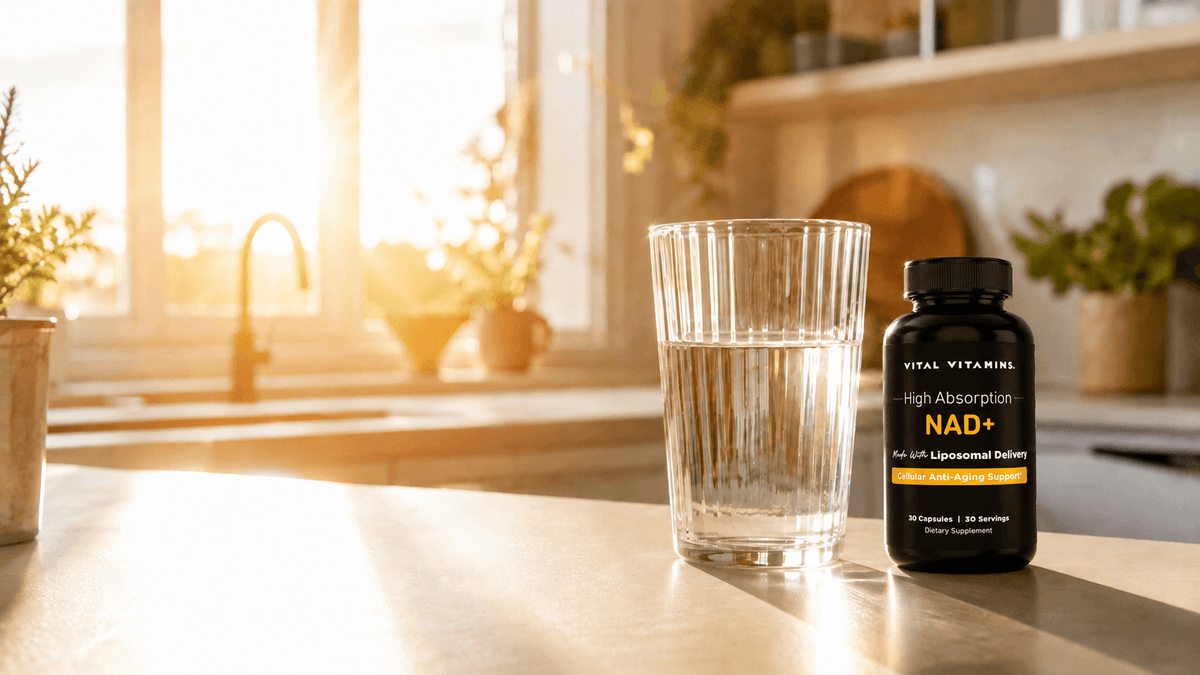
Yes — with a caveat worth being clear about. NAD+ itself is poorly absorbed when swallowed, so supplements use building blocks like nicotinamide riboside (NR). In 2018, a clinical trial found NR supplementation was well tolerated and elevated NAD+ in healthy middle-aged and older adults. [2] Raising NAD+ in blood is proven; the long-term effects on aging are still under active study. If you want to support your body's NAD+ production, our NAD+ supplement is formulated around that precursor pathway.
References
- Covarrubias AJ, et al. (2021). NAD+ metabolism and its roles in cellular processes during ageing. Nat Rev Mol Cell Biol. pubmed.ncbi.nlm.nih.gov/33353981
- Martens CR, et al. (2018). Chronic nicotinamide riboside supplementation is well-tolerated and elevates NAD+ in healthy middle-aged and older adults. Nat Commun. pubmed.ncbi.nlm.nih.gov/29599478
These statements have not been evaluated by the Food and Drug Administration. This product is not intended to diagnose, treat, cure, or prevent any disease.