


Exams challenge your brain in a unique way. Long study hours, higher stress, and disrupted sleep can affect focus, memory, and mental clarity.
Your brain relies on specific nutrients to produce energy, regulate stress hormones, and support healthy neurotransmitter signaling. When those systems are properly supported, concentration feels steadier, recall feels sharper, and mental fatigue is less likely to slow you down.
The right combination of vitamins, minerals, and research-backed plant compounds can support cognitive performance during high-demand seasons — including exams, certifications, professional testing, or any mentally intense period of life.
Key Takeaways
-
Omega-3 fatty acids support brain cell structure and memory performance.
-
B vitamins help convert food into usable brain energy and support neurotransmitters.
-
Magnesium promotes calm focus and a healthy stress response.
-
Vitamin D supports executive function and mood balance.
-
Ashwagandha and Lion’s Mane support stress resilience and cognitive performance.
-
A comprehensive formula simplifies dosing and consistency during busy weeks.
Why Brain Nutrition Matters During Exam Season
Your brain uses more energy than any other organ in your body. During intense study periods, demand increases.
Cognitive performance depends on:
-
Efficient neurotransmitter production
-
Stable energy metabolism
-
Healthy stress hormone regulation
-
Strong neuronal communication
-
Quality sleep for memory consolidation
When nutrition supports these systems, your brain performs more consistently under pressure.
Omega-3 Fatty Acids: Structural Support for Brain Cells
DHA (docosahexaenoic acid) and EPA (eicosapentaenoic acid) are omega-3 fats found in high concentrations in the brain.
DHA supports:
-
Healthy brain cell membrane structure
-
Efficient signal transmission
-
Learning and memory formation
Randomized controlled trials show DHA supplementation can improve memory and cognitive performance, particularly in adults with lower seafood intake.¹
Most adults benefit from 250–500 mg daily of combined EPA and DHA for general cognitive support.
If your diet lacks fatty fish like salmon or sardines, supplementation provides reliable support.
Vitamin B Complex: Brain Energy and Neurotransmitter Support
B vitamins act as essential cofactors in energy metabolism and neurotransmitter synthesis.
Key roles include:
-
B6 supports dopamine and serotonin production
-
Folate supports methylation and cognitive processing
-
B12 supports nerve integrity and mental clarity
Clinical research shows B vitamin supplementation supports cognitive performance, especially when baseline intake is suboptimal.²
Periods of high stress increase metabolic demand for B vitamins, making consistent intake especially important during exams.
Magnesium: Calm, Focused Mental Performance
Magnesium plays a role in more than 300 enzymatic reactions, including those that regulate stress response and brain signaling.
During exam season, magnesium supports:
-
Healthy cortisol balance
-
Relaxed but alert mental state
-
Improved sleep quality
-
Memory-related signaling pathways
Adults typically require 300–400 mg daily from food and supplements combined.
Leafy greens, almonds, pumpkin seeds, and whole grains provide magnesium naturally, but supplementation can help ensure consistent intake.
Vitamin D: Mood and Executive Function Support
Vitamin D receptors are widely distributed in brain tissue. Adequate levels support:
-
Executive function
-
Mood stability
-
Processing speed
-
Overall cognitive health
Low vitamin D status is associated with reduced cognitive performance. Maintaining optimal levels supports clear thinking and steady mood during stressful periods.
Sunlight exposure helps, but supplementation is often beneficial — especially during winter or indoor study seasons.
Ashwagandha: Stress Resilience for High-Pressure Weeks
Ashwagandha is an adaptogenic herb studied for its effects on stress regulation.
Clinical trials demonstrate that standardized ashwagandha extract can reduce cortisol levels and support improved stress resilience.³
During exams, this may translate to:
-
Calmer focus
-
Improved sleep
-
Reduced mental fatigue
-
Better sustained concentration
Common effective doses range from 300–600 mg daily of a standardized extract.
Lion’s Mane: Support for Memory and Neural Health
Lion’s Mane mushroom supports nerve growth factor (NGF), which plays a role in maintaining healthy neurons.
Human studies show Lion’s Mane supplementation supports memory performance and cognitive function in adults.⁴
Students and professionals often report:
-
Clearer thinking
-
Improved recall
-
Reduced brain fog
Effective daily amounts typically range from 500–1000 mg.
A Smarter Approach: Comprehensive Cognitive Support
During busy study seasons, simplicity matters.
Rather than juggling multiple separate supplements, a comprehensive formula designed for cognitive performance can streamline your routine and ensure balanced dosing.
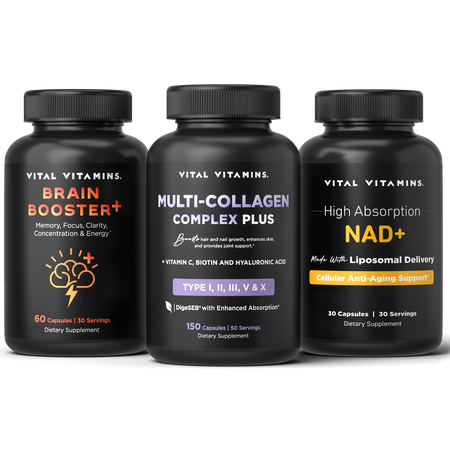
Vital Vitamins’ Brain Booster Plus combines key evidence-backed ingredients — including B vitamins, magnesium, adaptogenic support, and cognitive-enhancing compounds — in thoughtfully balanced amounts designed for daily use.
Learn more about the complete formula here:
https://www.myvitalvitamins.com/products/brain-booster-plus
This type of formulation helps support:
-
Mental clarity
-
Focus and concentration
-
Healthy stress response
-
Memory performance
-
Calm, sustained energy
By using clinically informed ingredient levels within a single formula, it becomes easier to stay consistent — which is one of the most important factors in cognitive support.
How to Use Brain-Support Nutrients Effectively
1. Be Consistent
Cognitive support builds with daily use, not occasional dosing.
2. Take in the Morning
Brain-support nutrients such as B vitamins and adaptogens work well earlier in the day to support focus and mental stamina.
3. Support with Food
Pair supplementation with:
-
Leafy greens
-
Lean protein
-
Healthy fats
-
Hydration
-
Whole grains
4. Protect Sleep
Memory consolidation happens at night. Prioritize 7–9 hours of sleep whenever possible.
Safety Considerations
When used as directed, the nutrients discussed here have strong safety profiles.
As always:
-
Follow labeled dosing instructions.
-
Consult a healthcare professional if pregnant, nursing, or managing medical conditions.
-
Inform your provider about supplement use before lab testing.
High-quality, well-formulated supplements offer a practical way to support brain performance during demanding seasons.
Conclusion
Exams demand focus, memory, and resilience. Supporting your brain nutritionally helps you meet that demand with clarity and confidence.
Omega-3 fatty acids, B vitamins, magnesium, vitamin D, ashwagandha, and Lion’s Mane each play important roles in cognitive performance and stress management. When combined thoughtfully — as in a comprehensive formula — they provide balanced daily support for mental clarity and sustained focus.
With consistent nutrition, proper sleep, and the right supplementation strategy, your brain can perform at its best when it matters most.
Endnotes
-
Yurko-Mauro K., et al. DHA supplementation improves memory and learning in adults with low DHA intake. Alzheimer’s & Dementia. 2010. https://www.mdpi.com/2072-6643/6/7/2730
-
Smith A.D., et al. B vitamins and cognitive performance: effects on brain function and memory. American Journal of Clinical Nutrition. 2010. https://pmc.ncbi.nlm.nih.gov/articles/PMC8080935/
-
Chandrasekhar K., et al. A prospective, randomized, double-blind study of ashwagandha on stress and anxiety. Indian Journal of Psychological Medicine. 2012. https://pmc.ncbi.nlm.nih.gov/articles/PMC3573577/
-
Mori K., et al. Effects of Lion’s Mane mushroom on cognitive function in adults. Biomedical Research. 2009. https://pubmed.ncbi.nlm.nih.gov/18844328/