


Many adults and parents look for natural ways to support focus, memory, and mental clarity. Modern life demands sustained attention, yet factors like stress, poor sleep, nutrient gaps, and busy schedules can make it difficult to stay mentally sharp throughout the day.
Some people also explore these strategies while managing attention challenges, including ADHD, alongside guidance from healthcare professionals.
Brain performance depends on many interconnected systems — including neurotransmitter balance, energy metabolism, circulation, sleep quality, and nutrition. When these systems work well together, it becomes easier to maintain focus, regulate emotions, and stay productive.
This guide explores evidence-based nutrition, supplements, and lifestyle strategies that may help support focus and cognitive performance as part of a healthy lifestyle.
Key Takeaways
• Nutrition, sleep, movement, and targeted supplementation can help support focus and executive function.¹
• Omega-3 fatty acids (EPA and DHA) are among the most studied nutrients for cognitive performance.²
• Minerals such as zinc, magnesium, and iron support neurotransmitter activity and nervous system health.³
• Certain botanicals — including ginseng, Bacopa monnieri, and pine bark extract — show promising cognitive support in research.
• Consistent lifestyle habits like exercise, sleep, and structured routines play a major role in maintaining attention and mental clarity.
Understanding the Foundations of Focus
Focus is not controlled by one single chemical in the brain. Instead, it depends on several systems working together, including:
• Neurotransmitter signaling
• Energy metabolism inside brain cells
• Blood flow and oxygen delivery to the brain
• Stress hormone balance
• Sleep quality and circadian rhythm
When these systems function well together, the brain can more easily sustain attention, regulate impulses, and process information efficiently.
Natural strategies for supporting focus typically aim to strengthen these underlying systems.
Nutrition and Brain Function
Reduce Highly Processed Foods
Highly processed foods often contain artificial dyes, preservatives, and added sugars that may affect energy stability and mood in some individuals.¹
While responses vary, emphasizing whole foods supports overall brain health and stable energy levels.
Helpful nutrition habits include:
• Adding protein at breakfast
• Including healthy fats at meals
• Limiting ultra-processed snack foods
• Staying well hydrated throughout the day
Balanced meals help maintain stable blood sugar levels, which directly influence concentration and mental clarity.
Omega-3 Fatty Acids: Core Brain Support
Omega-3 fatty acids — especially EPA and DHA — are structural components of brain cells. They help maintain cell membrane flexibility and support healthy neurotransmitter signaling.
A systematic review of randomized controlled trials involving more than 500 participants found that omega-3 supplementation produced modest improvements in attention and cognitive performance measures.²
These nutrients support:
• Healthy brain cell membranes
• Cognitive processing
• Mood balance
• Long-term brain health
Consistent daily intake appears more beneficial than occasional high doses.
Zinc, Magnesium, and Iron
Certain minerals play important roles in nervous system function and neurotransmitter activity.
Research shows that some individuals experiencing attention challenges may have lower levels of minerals such as zinc, magnesium, or iron.³
These nutrients support brain health in several ways:
Magnesium supports nervous system balance and relaxation.
Zinc plays a role in neurotransmitter signaling.
Iron contributes to dopamine production and oxygen delivery to brain cells.
Testing and professional guidance can help determine whether supplementation may be appropriate.
Botanical Ingredients That Support Cognitive Performance
Ginseng
Korean red ginseng has demonstrated improvements in attention and cognitive performance in small clinical trials.⁴ Compounds called ginsenosides may help support healthy brain signaling and resilience to stress.
French Maritime Pine Bark Extract (Pycnogenol®)
Pine bark extract contains antioxidant compounds that may support circulation and cognitive function. A small randomized trial reported improvements in attention and behavior measures after four weeks.⁵
Bacopa Monnieri
Bacopa monnieri is traditionally used to support memory and learning. Early research suggests it may help support cognitive performance and attention through its effects on neurotransmitter activity.⁶
Standardized extracts used at clinically relevant amounts tend to produce more reliable outcomes.
Why a Comprehensive Formula May Offer Broader Support
Brain health relies on many different pathways working together.
B-vitamins such as B6, folate, and B12 support cellular energy metabolism and contribute to healthy neurotransmitter activity. Magnesium helps maintain normal nervous system function. Choline, phosphatidylserine, phosphatidylcholine, and alpha-GPC support healthy brain cell membrane structure and signaling.
Botanical ingredients — including Ginkgo biloba, Rhodiola rosea, Bacopa monnieri, Lion’s Mane mushroom, grape seed extract, bilberry extract, and artichoke leaf extract — provide plant-based compounds that support circulation, antioxidant activity, and cognitive performance.
Amino acids such as N-acetyl-L-tyrosine and acetyl-L-carnitine help support cellular energy production and neurotransmitter pathways involved in focus and mental clarity.
Because cognitive performance relies on multiple biological systems — including circulation, energy metabolism, neurotransmitter balance, and cellular protection — a multi-ingredient approach may provide broader support than relying on a single nutrient alone.
Instead of stacking multiple supplements separately, many individuals prefer a thoughtfully formulated blend designed to support brain health in one convenient serving.
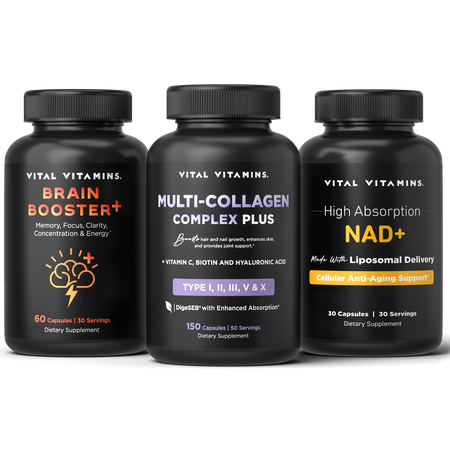
Vital Vitamins Brain Booster Plus follows this comprehensive approach. It combines B-vitamins, magnesium, choline compounds, amino acids, and standardized botanical extracts at evidence-informed levels to help promote focus, memory, and mental clarity as part of a healthy lifestyle.
Learn more about the full formula here: https://www.myvitalvitamins.com/products/brain-booster-plus
Lifestyle Strategies That Enhance Results
Sleep Consistency
Sleep plays a critical role in cognitive performance. Poor sleep can reduce attention span, impair memory formation, and increase impulsivity.
Establishing consistent sleep schedules and reducing screen exposure before bedtime helps support healthy brain recovery cycles.
Outdoor Time
A 2011 study found that spending time in natural environments improved attention and concentration in children experiencing attention challenges.⁷
Regular exposure to outdoor environments may help support stress regulation and mental clarity.
Physical Activity
Exercise increases blood flow to the brain and supports neurotransmitter balance. Research suggests aerobic exercise may improve attention and cognitive function.⁸
Helpful activities include:
• Brisk walking
• Cycling
• Swimming
• Team sports
• Strength training
Consistency is more important than intensity.
Structured Routines
Predictable routines reduce cognitive overload and support executive function. Visual schedules, clear expectations, and consistent daily habits help the brain maintain focus and organization.
How to Approach Brain Health Supplements Safely
Brain health supplements work best when they are:
• Evidence-informed
• Properly dosed
• Used consistently
• Coordinated with healthcare providers
Some individuals notice improvements with omega-3 support, while others benefit from mineral support or botanical blends.
The most reliable results often come from combining:
• Balanced nutrition
• High-quality supplementation
• Regular physical activity
• Consistent sleep habits
• Structured daily routines
The Bottom Line
Supporting focus and brain health requires a long-term approach built on consistent daily habits.
Research suggests nutrients such as omega-3 fatty acids, certain minerals, and standardized botanical extracts may help support cognitive function and mental clarity.²³⁴⁵ When combined with sleep, movement, and balanced nutrition, these strategies can help support sustained focus and overall cognitive performance.
Small improvements add up over time. By strengthening the systems that support brain health, many people can build a stronger foundation for attention, productivity, and mental resilience.
Endnotes
-
Wang L., et al. Complementary and alternative therapies for ADHD: Evidence review and clinical considerations. Frontiers in Psychiatry. 2022. https://pmc.ncbi.nlm.nih.gov/articles/PMC9608000/
-
Chang J.P., et al. Omega-3 polyunsaturated fatty acids in ADHD treatment: Systematic review and meta-analysis. Nutrients. 2023. https://pmc.ncbi.nlm.nih.gov/articles/PMC10444659/
-
Effatpanah M., et al. Magnesium, zinc, and iron status in children with ADHD: Meta-analysis findings. Psychiatry Research. 2019. https://www.sciencedirect.com/science/article/abs/pii/S0165178118318456
-
Lee S.H., et al. Effects of Korean red ginseng on attention and behavior in children with ADHD. Journal of Ginseng Research. 2011. https://pmc.ncbi.nlm.nih.gov/articles/PMC11385392/
-
Trebatická J., et al. Pycnogenol® improves symptoms of ADHD in children: Randomized study. European Child & Adolescent Psychiatry. 2006. https://pmc.ncbi.nlm.nih.gov/articles/PMC4757677/
-
Kean J.D., et al. Bacopa monnieri and cognitive performance in children: Open-label trial findings. Advances in Mind-Body Medicine. 2016. https://pmc.ncbi.nlm.nih.gov/articles/PMC5855296/
-
Taylor A.F., et al. Nature exposure improves attention in children with ADHD. Journal of Attention Disorders. 2011. https://pmc.ncbi.nlm.nih.gov/articles/PMC11663905/
- Cerrillo-Urbina A.J., et al. The effects of aerobic exercise on ADHD symptoms: Systematic review. Journal of Attention Disorders. 2015. https://pmc.ncbi.nlm.nih.gov/articles/PMC5504911/