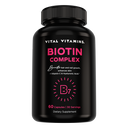


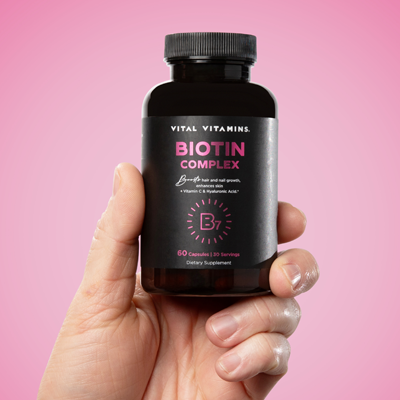
If your hair has been feeling thinner, weaker, or just not as vibrant as it used to be, you’re not alone. Many people begin looking for natural, supportive ways to nourish their hair from within — and biotin is one of the most talked-about nutrients for promoting stronger, healthier-looking strands.
Biotin (vitamin B7) is an essential, water-soluble vitamin that your body uses every single day. It plays a central role in energy metabolism, supports healthy cellular function, and contributes to the natural production of keratin — the structural protein that gives hair its strength and resilience.
While biotin is not a treatment for medical hair loss conditions, maintaining healthy levels may help support thicker-looking, more resilient strands. This guide explains how biotin works, why many people choose higher supplemental amounts, and how to incorporate it into a balanced routine designed for long-term hair wellness.
Key Takeaways
- Biotin supports natural keratin production, the protein that forms strong hair strands.
- The general adequate intake (AI) is 30 mcg/day, which prevents deficiency — not the amount commonly used for cosmetic support.
- Many individuals choose 2,500–10,000 mcg supplements to support thicker-looking, healthier-feeling hair.
- Biotin-rich foods include eggs, nuts, salmon, avocados, mushrooms, and legumes.
- Consistency matters: visible improvements often require 8–12 weeks.
How Biotin Supports Hair Health
Healthy-looking hair starts at the follicle level. Biotin helps support the internal processes that create strong strands from the inside out.
Supports Natural Keratin Production
Keratin is the essential protein that forms the structure of hair. Your body makes keratin naturally, but it needs certain nutrients — including biotin — to do so efficiently.
Biotin acts as a cofactor in enzyme reactions that help produce keratin. When your biotin levels are adequate, keratin production can function optimally, supporting hair that feels stronger, smoother, and more resilient to daily stressors.
This is one reason why individuals who want to enhance the cosmetic appearance of their hair often use higher-dose biotin supplements.
Helps Maintain Healthy Hair Follicles
Hair grows from follicles located just beneath the scalp. These follicles require nutrients to stay strong, stable, and productive.
Biotin supports metabolic activities within the follicle, helping maintain its structure and integrity. When follicles are well-nourished, hair may appear:
- Fuller
- Shinier
- More vibrant
-
Less prone to breakage
Results vary by individual, but supporting your follicles can contribute to hair that looks healthier over time.
Supports the Natural Hair Growth Cycle
Hair growth happens in phases. Each strand goes through periods of growth, rest, and shedding — a normal cycle that continues throughout life.
Biotin plays a role in the cellular processes that support this natural cycle, including protein synthesis. While biotin won’t accelerate growth beyond your biological limits, it helps create an internal environment that supports strong, healthy-looking hair as it grows.
Natural Sources of Biotin
Biotin is widely available through foods, supplements, and fortified products.
Natural food sources
Many everyday foods supply biotin naturally, including:
- Egg yolks
- Nuts and seeds (almonds, walnuts, sunflower seeds)
- Beef liver
- Salmon
- Avocados
- Sweet potatoes
- Mushrooms
- Legumes (soybeans, lentils)
Including a variety of these foods can help support healthy biotin intake through your diet.
Biotin supplements
Biotin supplements provide a convenient way to support higher daily intake, especially for individuals focusing on hair strength, shine, and overall vitality.
Most biotin supplements fall within the 2,500–10,000 mcg range. While research does not define a single “ideal” cosmetic dosage, the higher end of this range is widely used, well-tolerated, and aligned with real-world beauty goals.
Safety Considerations
Biotin is water-soluble, meaning your body naturally eliminates what it doesn’t need. For most healthy adults, high-dose biotin is considered safe.
The main precaution is lab test interference. High-dose biotin can affect certain blood tests — particularly thyroid, hormone, and cardiac markers. Inform your healthcare provider if you regularly take biotin before any lab work.
Biotin-enriched hair products
While topical biotin does not replace dietary intake, it can complement your routine. Many shampoos, conditioners, and leave-ins include biotin to help:
- Smooth the hair shaft
- Reduce friction
- Improve manageability
- Reduce the appearance of breakage
For best results, choose formulas designed for your hair type (dry, oily, color-treated, fine, or coarse).
Tips for Using Biotin Effectively
Supporting healthy-looking hair is a long-term commitment. Here’s how to get the most from your biotin routine:
1. Stay Consistent
Hair changes slowly. Most people begin noticing visible improvements — such as strength, shine, or fullness — after 8–12 weeks.
2. Pair Biotin with a Nutrient-Rich Diet
Biotin works best alongside other hair-supporting nutrients:
- Zinc
- Vitamin C
- Protein
- Healthy fats
-
Hydration
A balanced diet strengthens the foundation for resilient hair.
3. Track Your Progress
Take weekly photos, keep notes, or simply pay attention to texture, shine, and breakage. Subtle improvements add up over time.
Potential Side Effects and Precautions
Biotin is generally safe and well tolerated. However:
- High doses can interfere with certain lab tests.
- Pregnant or nursing individuals should speak with their healthcare provider before supplementing.
- Individuals with medical conditions should consult a doctor prior to use.
-
Since biotin is water-soluble, excess is typically excreted in urine.
Always follow the guidance of a qualified healthcare professional when adding new supplements to your routine.
Conclusion
Biotin is one of the most widely used nutrients for supporting healthy-looking hair — and for good reason. It plays a central role in keratin production, supports follicle function, and contributes to stronger-looking, more resilient strands.
While the body only needs 30 mcg/day to prevent deficiency, many people choose higher amounts (like 5,000 mcg) to support the cosmetic appearance of thicker, more vibrant hair.
When paired with a nutrient-rich diet and consistent routine, biotin can be a simple, effective addition to your wellness journey — helping nourish your hair from within, one day at a time.
Endnotes
-
Zempleni J., et al. Biotin plays essential roles in metabolism and gene regulation. Annual Review of Nutrition. 2008. https://www.annualreviews.org/doi/10.1146/annurev.nutr.28.061807.155440
-
Patel D., et al. Review of biotin’s role in hair and nail health. Journal of Drugs in Dermatology. 2017. https://jddonline.com/articles/dermatology/S1545961617P0112X
-
Mock D. Biotin deficiency and human health. American Journal of Clinical Nutrition. 2017. https://academic.oup.com/ajcn/article/106/suppl_1/100/4633960
- Boland M., et al. High-dose biotin can interfere with laboratory tests. New England Journal of Medicine. 2017. https://www.nejm.org/doi/full/10.1056/NEJMclde1700672