
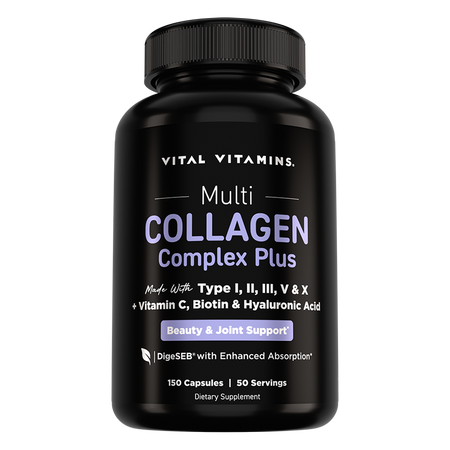

Menopause is one of the biggest turning points for your body's collagen. As estrogen falls, skin collagen drops faster than at any other point in adult life — which is why so many women notice changes in skin, hair, and nails in their late 40s and 50s. Collagen supplements can't replace estrogen, but they can supply the raw material your body uses to support these tissues.
What happens to collagen at menopause
Estrogen helps maintain collagen, so when estrogen declines through perimenopause and menopause, collagen does too. Research measuring skin in postmenopausal women found collagen content falls by roughly 1–2% per year, with a disproportionate share — by some estimates up to about 30% — lost in the first five years after menopause. [1] That early drop is steep, which is why changes can feel like they arrive quickly.
How it tends to show up
Because collagen is structural, the changes are mostly about firmness and resilience:
- Skin can feel less firm and more prone to dryness and fine lines.
- Nails may become more brittle or slower-growing.
- Hair can feel finer or less full.
- Joints may feel stiffer, as cartilage and connective tissue rely on collagen too.
These are normal, expected shifts — not something to be alarmed by. They're simply the visible side of a change happening in your connective tissue.
Can collagen supplements help?
Supplements can support some of these tissues, within limits. Collagen peptides supply amino acids your body uses to maintain skin, hair, nails, and connective tissue. In controlled research — not specific to menopause, but relevant to the same tissues — daily collagen peptides supported skin elasticity over 8 to 12 weeks [2] and stronger, faster-growing nails over about 24 weeks. [3]
What collagen is not: it isn't hormone replacement, it doesn't treat menopause or its medical symptoms, and it won't restore estrogen. If you're weighing options for menopausal symptoms or bone health, that's a conversation for your doctor. Collagen is a supportive nutrient for skin, hair, and nails — think of it as one helpful piece, not the whole answer.
How to use it during this stage
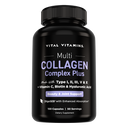
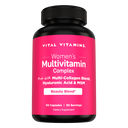
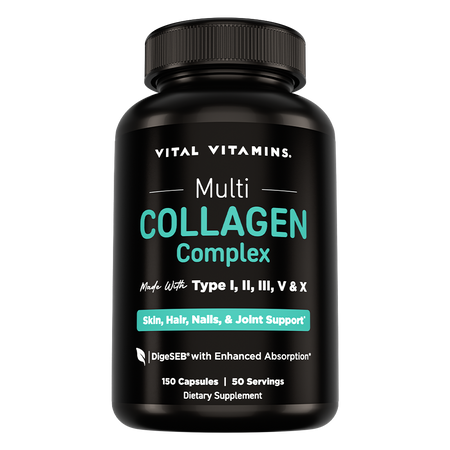
The basics don't change: a hydrolyzed, multi-type collagen taken daily, in the typical 2.5–10 g range. Many women in this stage also pair collagen with a daily multivitamin to cover broader nutritional needs — our Women's Multivitamin is built for that. If shifting sleep or stress is part of the picture, Multi Collagen Complex + Calm pairs the same five collagen types with L-Theanine, Ashwagandha, and Magnesium Glycinate for an evening wind-down.* Give any routine a couple of months of consistent use before judging results, and keep up sun protection, which matters as much as anything for skin.