When your energy dips and your brain feels foggy, most people reach for one of two things: coffee or a focus supplement.
Both can help you feel sharper and more mentally switched on. They simply work in different ways.
Coffee delivers a familiar caffeine boost that helps you feel more awake quickly. Brain-support supplements take a broader approach by combining nutrients and botanical ingredients designed to support focus, clarity, concentration, and mental energy.
So which one is better for focus?
The answer depends on what your brain needs at the moment—and what kind of support you want throughout the day.
Key Takeaways
-
Coffee supports fast alertness because caffeine blocks adenosine, a brain signal associated with fatigue.¹
-
Moderate caffeine intake (up to 400 mg per day) is generally considered safe for most healthy adults.¹
-
Brain-support nutrients such as B vitamins, magnesium, and botanical extracts help support mental energy, focus, and cognitive performance.²
-
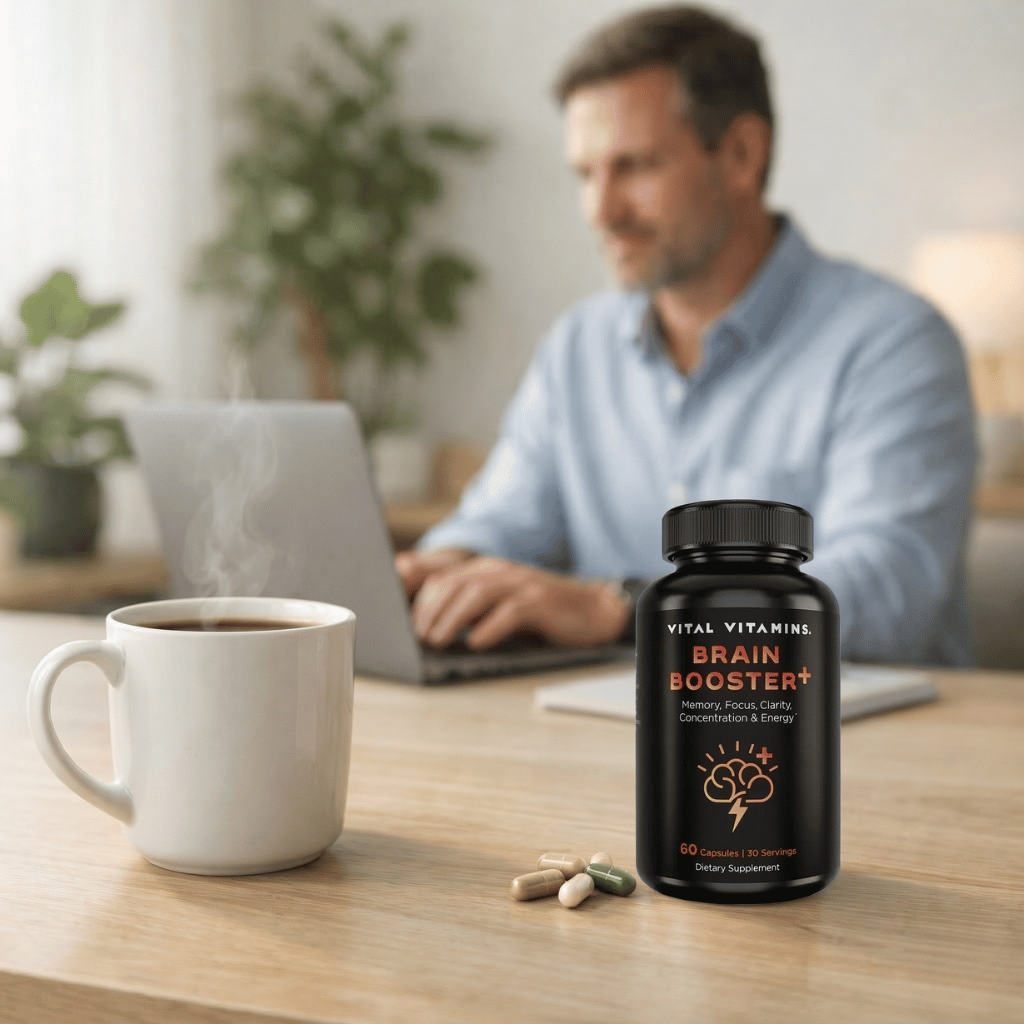
Comprehensive formulas like Brain Booster Plus combine multiple ingredients designed to support clarity, concentration, productivity, and mental endurance.
-
Many people include both coffee and brain-support supplements in their routine for balanced cognitive support.
Why Coffee Helps You Focus
Coffee has earned its reputation as a reliable mental pick-me-up.
The reason is caffeine. Caffeine blocks adenosine receptors in the brain. Adenosine builds up during the day and signals that your body is getting tired. When caffeine blocks that signal, you feel more alert and awake.¹
For many people, that shift happens quickly—often within 15 to 30 minutes.
That’s why coffee is commonly used to help with:
-
Starting the day with more energy
-
Staying alert during long work sessions
-
Pushing through an afternoon slump
-
Maintaining focus during demanding tasks
When used in moderation, coffee can be a helpful tool for supporting daily productivity.
What Coffee Does Well
Coffee shines when you want a quick lift in alertness.
Research consistently shows that caffeine can help improve vigilance, reaction time, and attention—especially when fatigue is the main challenge.¹
For healthy adults, moderate caffeine intake fits comfortably within most wellness routines. Up to 400 mg of caffeine per day is widely considered a safe level for most people.¹
That’s roughly three to four standard cups of coffee.
Where Brain Supplements Offer Broader Support
Alertness is only one part of mental performance.
Clear thinking, productivity, concentration, and memory rely on multiple biological systems working together. These include neurotransmitter production, nerve signaling, and cellular energy within brain cells.
Brain-support supplements are designed to support these systems more directly by providing nutrients and plant compounds that contribute to healthy cognitive function.
Instead of relying on stimulation alone, they aim to support the brain’s ability to stay focused, organized, and mentally energized.
Nutrients That Support Cognitive Performance
Well-designed brain formulas combine ingredients that support several aspects of mental performance.
B Vitamins and Brain Energy
B vitamins such as B6, B12, and folate support the production of neurotransmitters and help the body convert nutrients into usable cellular energy.²
Because brain cells have high energy demands, these vitamins play an important role in maintaining focus and mental clarity.
Magnesium and Nerve Function
Magnesium supports healthy nerve signaling and communication between brain cells.³
Balanced magnesium levels help maintain normal nervous system activity, which contributes to cognitive performance.
Botanical Ingredients for Focus and Clarity
Botanical ingredients such as bacopa, rhodiola, lion’s mane mushroom, and ginkgo have been studied for their roles in supporting mental clarity, memory, and stress resilience.⁴
These plant compounds are often included in cognitive formulas designed to help people stay mentally engaged and productive.
A Comprehensive Approach to Mental Energy
Many brain-support supplements combine several types of ingredients into one formula.
For example, Brain Booster Plus includes a blend of B vitamins, magnesium, choline, and botanical ingredients designed to support focus, clarity, concentration, mental energy, and productivity as part of a daily routine.
By supporting multiple cognitive pathways, formulas like this aim to help people feel mentally sharp and ready to take on demanding tasks.
Many users incorporate these types of supplements into their routine when they want support for focus and mental endurance during busy days.
Coffee vs. Brain Supplements: A Helpful Comparison
Coffee and brain-support supplements serve slightly different purposes.
Coffee: Quick Alertness
Coffee is often the fastest way to feel more awake.
If your main challenge is fatigue—especially early in the morning or during an afternoon lull—coffee can help you feel more alert quickly.
Brain Supplements: Focus and Mental Performance
Brain-support supplements aim to support focus, concentration, clarity, and productivity through multiple pathways.
Instead of targeting only wakefulness, they provide nutrients and plant compounds that help support cognitive performance throughout the day.
Can You Use Both?
Yes. Many people include both coffee and brain-support supplements in their routine.
For example, someone might enjoy a morning coffee while also taking a daily brain-support supplement designed to support focus and productivity during work, study, or other mentally demanding activities.
When used responsibly, this approach can combine the familiar alertness of coffee with broader nutritional support for cognitive performance.
As always, follow recommended serving guidelines and speak with a healthcare professional if you have questions about adding supplements to your routine.
The Bottom Line
Coffee and brain supplements both support focus—but in different ways.
Coffee works quickly by helping you feel more alert.
Brain-support formulas provide nutrients and botanical ingredients that support clarity, concentration, and mental energy.
If you enjoy coffee, there is no need to give it up. But if you want broader support for focus and productivity, a comprehensive formula like Brain Booster Plus can be a helpful addition to your daily routine.
The goal isn’t just staying awake—it’s supporting the clear, focused thinking that helps you perform at your best.
References
-
Nawrot P., et al. Effects of caffeine on human health. Food Additives & Contaminants. 2003. Caffeine up to 400 mg/day is generally considered safe for most adults. https://pubmed.ncbi.nlm.nih.gov/12519715/
-
Smith A., Refsum H. Homocysteine, B vitamins, and cognitive impairment. Annual Review of Nutrition. 2016. B vitamins play key roles in brain metabolism and cognitive health. https://www.annualreviews.org/doi/10.1146/annurev-nutr-071715-050947
-
Slutsky I., et al. Enhancement of learning and memory by elevating brain magnesium. Neuron. 2010. Brain magnesium levels influence synaptic plasticity and learning. https://www.sciencedirect.com/science/article/pii/S089662731000544X
-
Kennedy D., et al. Effects of Bacopa monnieri on cognitive function. Journal of Psychopharmacology. 2001. Bacopa supplementation supported memory performance in healthy adults. https://journals.sagepub.com/doi/10.1177/026988110101500507
-
Eskelinen M., Kivipelto M. Caffeine as a protective factor in dementia and Alzheimer’s disease. Journal of Alzheimer’s Disease. 2010. Moderate coffee intake associated with reduced cognitive decline risk. https://content.iospress.com/articles/journal-of-alzheimers-disease/jad100339
- Haskell C., et al. The combined effects of L-theanine and caffeine on cognitive performance. Biological Psychology. 2008. L-theanine with caffeine supported attention and reduced jittery effects. https://www.sciencedirect.com/science/article/pii/S0301051108000110