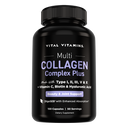



Collagen is one of the most abundant proteins in your body — making up about 30% of your total protein. Often called the “glue” that holds everything together, collagen supports skin elasticity, joint mobility, bone strength, and even gut health.
But here’s the catch: not all collagen is the same. Scientists have identified at least 28 different types of collagen, and while they all serve structural purposes, only a handful are especially important for human health. That’s why many supplements today are marketed as multi-collagen—because each type contributes something unique.
If you’re wondering which ones matter most for beauty, wellness, and anti-aging, here’s a breakdown of the five key types of collagen and what they do.

What is Collagen?
Collagen is a structural protein found in skin, bones, muscles, tendons, and ligaments. Think of it as scaffolding—it gives your body strength, shape, and flexibility.
Unfortunately, as we age, natural collagen production declines. This leads to wrinkles, sagging skin, brittle nails, stiff joints, and slower recovery from injuries. Lifestyle factors like sun exposure, smoking, stress, and poor diet can also speed up collagen loss.
That’s why collagen supplements—particularly those containing multiple types—have grown so popular for supporting skin health, joint flexibility, and overall vitality.
The 5 Main Types of Collagen
1. Type I Collagen – Skin, Hair & Nails
Type I is the most abundant collagen in the body. It’s concentrated in your skin, bones, tendons, and teeth.
• Promotes firm, youthful-looking skin
• Supports strong hair and nails
• Helps with wound healing and scar tissue formation
When you think of anti-aging collagen, Type I is the star player.
2. Type II Collagen – Joints & Cartilage
Type II collagen is primarily found in cartilage, making it essential for joint health.
• Cushions joints and supports flexibility
• Helps with mobility and comfort
• Often used in supplements for arthritis or joint stiffness
If you’re taking collagen for joint support, Type II is the one to watch.
3. Type III Collagen – Skin Elasticity & Organs
Often found alongside Type I, Type III collagen is concentrated in the skin, muscles, and blood vessels.
• Supports skin elasticity and firmness
• Plays a role in healthy circulation
• Helps maintain gut lining integrity
Type III is especially important for skin smoothness and youthful appearance, making it another key anti-aging collagen.
4. Type V Collagen – Eye & Hair Health
Type V is less abundant but still crucial. It’s found in the cornea of the eyes, skin, and hair.
• Supports eye health and corneal structure
• Contributes to healthy hair growth
• Works with Type I and III to build skin and tissue strength
5. Type X Collagen – Bone & Joint Repair
Type X collagen is often called the “cartilage collagen” because it plays a major role in bone formation and healing.
• Essential for bone development and repair
• Supports joint health and regeneration
• Helps maintain a strong skeletal structure
This type is especially valuable for athletes and active lifestyles.
Why Multi-Collagen is Beneficial
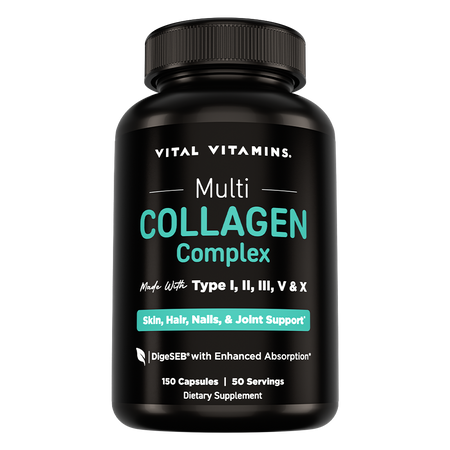
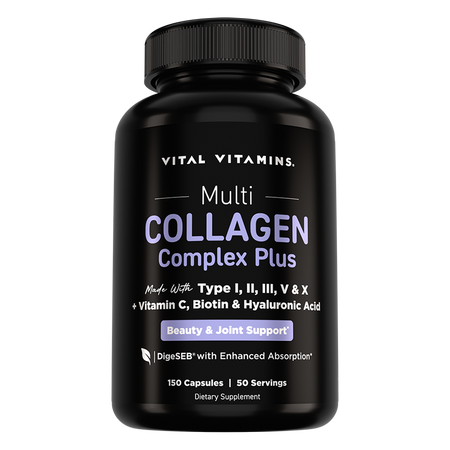
Since each collagen type serves a different purpose, multi-collagen supplements combine several types (usually I, II, III, V, and X) to deliver a full spectrum of benefits.
• Skin health & anti-aging (Types I & III)
• Joint comfort & mobility (Types II & X)
• Hair, nails & eye health (Type V)
Final Thoughts
Collagen is more than a beauty buzzword—it’s a cornerstone of overall wellness. While your body makes collagen naturally, production slows with age, which is why supplementation can be so beneficial.
Understanding the different types of collagen helps you choose the right supplement for your needs, whether your goal is youthful skin, stronger joints, or all-around vitality.
For the best results, look for a multi-collagen supplement that combines Types I, II, III, V, and X—so you can support your body from every angle.
- https://my.clevelandclinic.org/health/articles/23089-collagen
- https://www.ncbi.nlm.nih.gov/pmc/articles/PMC3003457/
- https://pubmed.ncbi.nlm.nih.gov/19344236/
- https://pubmed.ncbi.nlm.nih.gov/24401291/
- https://pubmed.ncbi.nlm.nih.gov/24936469/
- https://www.ncbi.nlm.nih.gov/pmc/articles/PMC128896/
- https://www.ncbi.nlm.nih.gov/pmc/articles/PMC4932973/
- https://jissn.biomedcentral.com/articles/10.1186/1550-2783-6-17
- https://www.ncbi.nlm.nih.gov/pmc/articles/PMC3003457/
- https://pubmed.ncbi.nlm.nih.gov/11566268/
- https://pubmed.ncbi.nlm.nih.gov/15569621/