


Occasionally forgetting a name, misplacing your keys, or blanking on a familiar word can feel unsettling. The good news is that these moments are common as we age — and they don’t mean your memory is failing.
Age-related memory changes often reflect how the brain responds to lifestyle habits, daily stress, sleep quality, nutrition, and activity levels over time. Research consistently shows that simple, proactive strategies can support memory, focus, and long-term cognitive health.¹
This guide walks through practical prevention strategies, brain-supportive dietary patterns, and evidence-informed supplements that may help maintain memory as you age. Small, steady habits can add up to meaningful support for your brain — starting today.²
Key Takeaways
-
Regular physical activity — about 150 minutes per week — supports brain structure, memory performance, and long-term cognitive health.¹
-
Consistent sleep (7–9 hours per night) plays a central role in memory formation and brain maintenance.²
-
Staying socially connected may lower the risk of cognitive decline by supporting multiple brain networks.³
-
Mediterranean and MIND-style diets are linked to slower memory decline and healthier aging.⁴
-
Omega-3 fatty acids are associated with lower risk of cognitive decline and long-term brain support.⁷
Lifestyle Strategies to Support Memory as You Age
Daily routines shape brain health over time. Small, sustainable choices can help preserve mental clarity and support healthy aging.
Exercise Regularly for Brain Health
Physical activity increases blood flow to the brain, delivering oxygen and nutrients that support memory and attention. Aerobic exercise — such as brisk walking, cycling, or swimming — has been shown to support hippocampal health, a region critical for memory.¹
Strength training adds another layer of benefit. Resistance exercises encourage neuroplasticity and are associated with improvements in spatial awareness and recall. Older adults who follow structured exercise programs often show clearer thinking within months.¹
A balanced routine that includes aerobic movement, strength training, and balance work provides broad cognitive support. The key is consistency — choose activities you enjoy and can maintain.
Prioritize Quality Sleep
Sleep is when the brain organizes and stores new information. Most adults function best with 7–9 hours of sleep per night, and consistent sleep schedules support memory consolidation and mental sharpness.²
Sleep disturbances become more common with age and can affect focus and recall. Research suggests that regular physical activity, calming nighttime routines, and managing stress all support healthier sleep patterns.²
Stay Socially Connected
Social interaction stimulates attention, language, and emotional processing centers in the brain. Strong social ties are associated with better memory performance and a lower risk of cognitive decline.³
Simple habits — joining a group, volunteering, or scheduling regular check-ins with friends or family — can support both mental and emotional well-being. Addressing hearing challenges early can also help maintain meaningful connections.
Manage Stress Thoughtfully
Long-term stress can affect memory and focus by influencing hormone balance and brain signaling.⁵ Practices like mindfulness, deep breathing, gentle movement, and time outdoors help calm the nervous system and support mental clarity.
Keeping the mind active through learning, reading, or puzzles complements stress management and encourages ongoing brain engagement.
Dietary Approaches for Memory Support
What you eat consistently matters more than any single food. A nutrient-rich pattern supports brain resilience over time.
Emphasize Brain-Supportive Foods
-
Fatty fish (salmon, sardines): Rich in omega-3 fatty acids that support brain cell structure
-
Nuts and seeds: Provide healthy fats, antioxidants, and minerals
-
Leafy greens: Supply folate, vitamin K, and plant compounds linked to cognitive support
-
Colorful fruits and vegetables: Offer polyphenols that help protect brain cells
-
Olive oil: A staple fat in Mediterranean-style eating patterns
Mediterranean and MIND diets — which emphasize these foods — are consistently associated with slower cognitive decline and healthier aging.⁴
Limit Highly Processed Foods and Excess Sugar
Diets high in added sugars and ultra-processed foods are linked with inflammation that may affect brain function. Choosing whole foods, fiber-rich carbohydrates, and healthy fats supports steady energy and focus throughout the day.⁶
Supplements That May Support Memory
Some adults choose supplements to complement healthy lifestyle habits. Always consult a healthcare professional before starting new supplements, especially if you take medications or manage health conditions.
Omega-3 Fatty Acids (DHA & EPA)
Omega-3s support brain cell membranes and communication. Higher dietary intake and blood levels of DHA and EPA are associated with reduced risk of cognitive decline and long-term brain support.⁷
Long-term omega-3 use has been linked with a substantially lower risk of Alzheimer’s disease in observational studies.⁷ For those who don’t regularly eat fatty fish, supplements can help fill nutritional gaps.
Ginkgo Biloba
Ginkgo biloba has a long history of use for cognitive support. Research suggests standardized extracts may support circulation and neuronal signaling involved in memory.⁸
Preclinical studies indicate potential neuroprotective effects, particularly in areas related to learning and recall. Human results vary, so professional guidance is recommended.
Vitamin B12
Vitamin B12 supports nerve health and normal brain function. Adequate B12 status is associated with slower memory decline in aging adults, even when folate intake is sufficient.⁹
Because absorption can decrease with age, some individuals benefit from testing and targeted supplementation under medical guidance.
Supporting Memory with a Complete Routine
Lifestyle habits work best together. Movement, nutrition, sleep, stress management, and social engagement create a strong foundation for brain health.
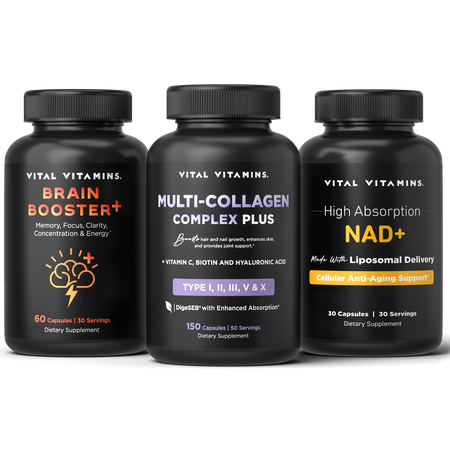
Some individuals also choose comprehensive formulas that combine nutrients studied for cognitive support. Products like Brain Booster Plus are designed to complement a healthy routine by delivering thoughtfully selected ingredients in one convenient option.
Conclusion
Age-related memory changes are common — but they are not something you’re powerless against. Daily choices play a meaningful role in how your brain ages.
By staying active, eating for brain health, prioritizing sleep, managing stress, and nurturing social connections, you support your memory from multiple angles. Supplements such as omega-3s, Ginkgo biloba, and vitamin B12 may offer additional support when used thoughtfully and under professional guidance.
Small, consistent steps today can help protect memory and support mental clarity for years to come.
Endnotes
-
Erickson K.I., et al. Physical activity, hippocampal volume, and memory in aging adults. Proceedings of the National Academy of Sciences. 2011. https://pmc.ncbi.nlm.nih.gov/articles/PMC12085549/
-
Scullin M.K., et al. Sleep, memory consolidation, and aging. Journal of Sleep Research. 2023. https://onlinelibrary.wiley.com/doi/10.1111/jsr.14189
-
Kuiper J.S., et al. Social relationships and risk of dementia. Journal of Clinical Epidemiology. 2015. https://www.sciencedirect.com/science/article/pii/S0378512224001579
-
Morris M.C., et al. MIND diet and cognitive decline. Alzheimer’s & Dementia. 2015. https://pmc.ncbi.nlm.nih.gov/articles/PMC8126018/
-
McEwen B.S., et al. Stress effects on brain structure and cognition. Neuroscience & Biobehavioral Reviews. 2023. https://www.sciencedirect.com/science/article/pii/S0149763423003342
-
Chen X., et al. Dietary patterns and cognitive health. Nutrients. 2024. https://pmc.ncbi.nlm.nih.gov/articles/PMC11405642/
-
Zhang Y., et al. Omega-3 fatty acids and dementia risk. American Journal of Clinical Nutrition. 2023. https://www.sciencedirect.com/science/article/pii/S0002916523463204
-
Smith J.V., Luo Y. Ginkgo biloba mechanisms in neuroprotection. Neurochemical Research. 2004. https://pmc.ncbi.nlm.nih.gov/articles/PMC8014356/
-
O’Leary F., Samman S. Vitamin B12 and cognitive function. American Journal of Clinical Nutrition. 2010. https://pmc.ncbi.nlm.nih.gov/articles/PMC12568389/