

Collagen peptides vs. multi collagen: what's the difference?
Collagen peptides and multi collagen describe two different things, so they are not competing options. "Peptides" refers to the form: collagen that has been hydrolyzed, or broken into short amino acid chains your body can absorb more easily. "Multi collagen" refers to the content: a blend of several collagen types, such as I, II, III, V, and X, from multiple sources. Most multi collagen supplements are also peptides.
| Collagen peptides | Multi collagen | |
|---|---|---|
| What it describes | The form (hydrolyzed for absorption) | The contents (multiple collagen types) |
| Typical label example | "Hydrolyzed collagen peptides, type I & III" | "Types I, II, III, V, X from bovine, marine, chicken, eggshell" |
| Can it be both? | Yes. A multi collagen product made with hydrolyzed collagen is both at once. | |
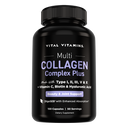
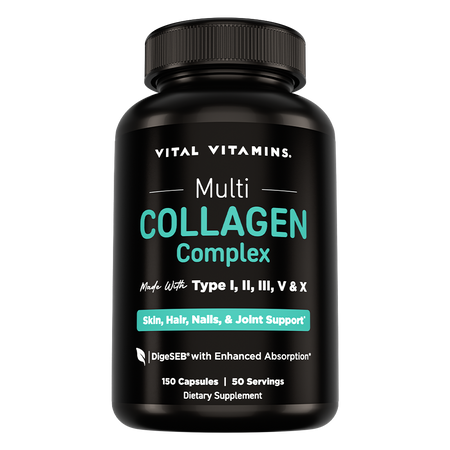
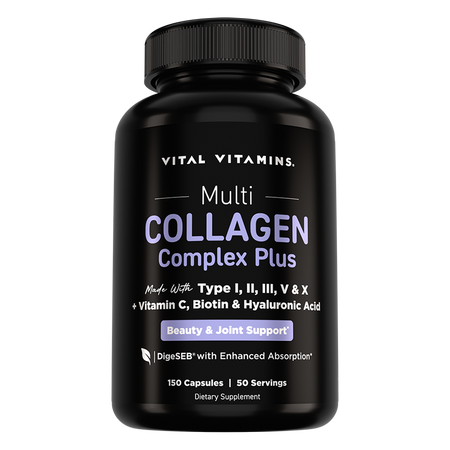
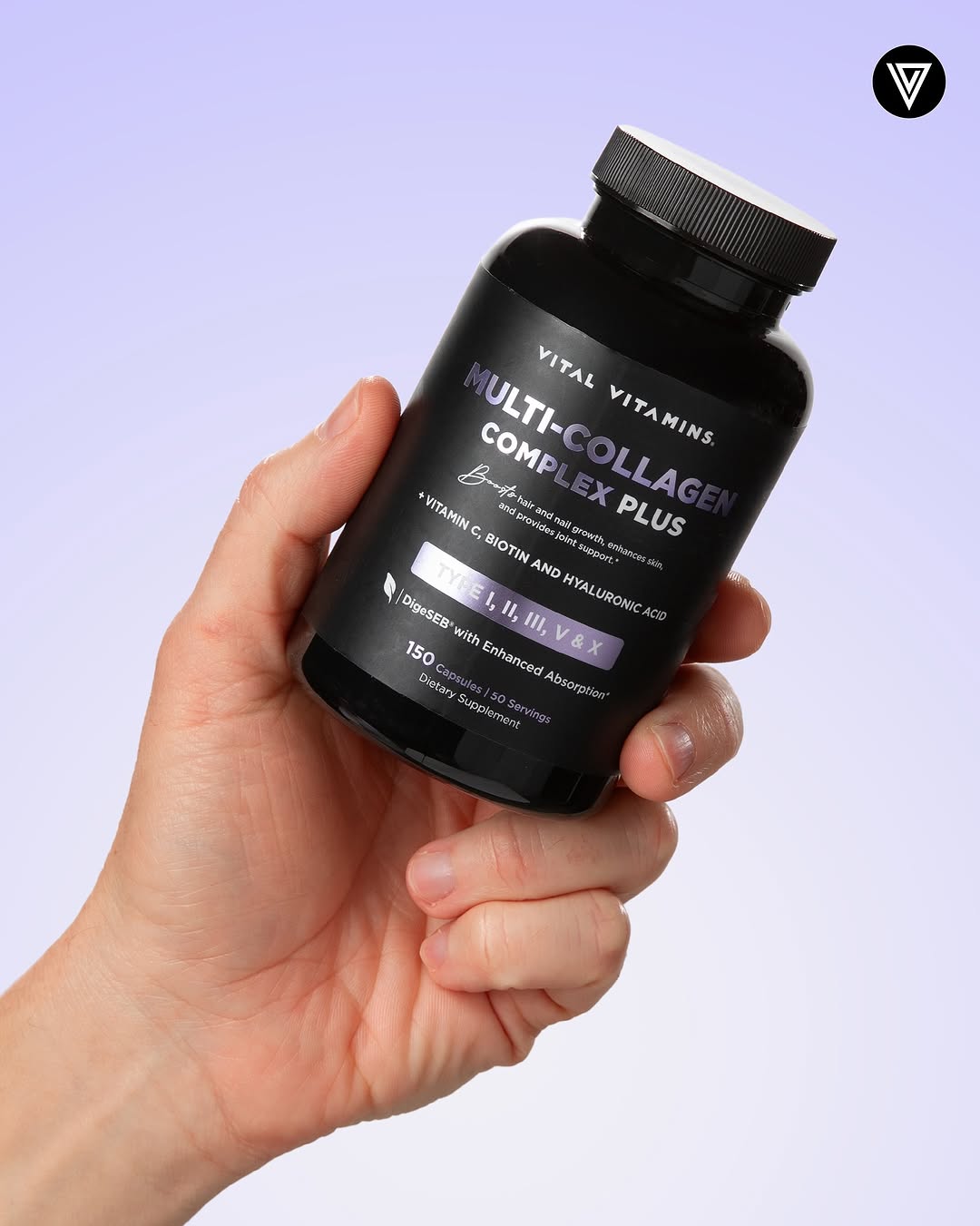
The real decision, covered in the rest of this guide, is single-source versus multi-source, since the form is usually hydrolyzed either way. If you want broad coverage in one bottle, our Multi Collagen Pills deliver hydrolyzed collagen peptides from five collagen types in a single daily serving.
Choosing between multi-collagen and single-source collagen can feel overwhelming at first. Both options are commonly used to support skin elasticity, joint comfort, and healthy hair — but they work in different ways.
Collagen supplements provide collagen peptides, which are broken-down proteins your body can use as building blocks. The source and type of collagen you choose can influence which tissues receive the most support.
Scientists have identified at least 28 types of collagen in the human body, though supplements typically include only a few of the most studied forms. This guide explains the differences between multi-collagen and single-source collagen in plain language, so you can choose an option that fits your goals — whether that’s skin hydration, joint support, muscle recovery, or overall wellness.
By the end, choosing a collagen powder that fits naturally into your routine should feel simple.
Key Takeaways
- Multi-collagen blends combine complementary collagen sources to deliver a broader spectrum of collagen peptides that support skin, joints, bones, and connective tissues.
- Single-source collagen usually delivers one or two collagen types to target a specific goal, such as skin appearance or joint comfort.
- Research shows hydrolyzed collagen can support skin hydration and elasticity when used consistently.
- Different collagen types support different tissues, so formulation and timing can matter.
- Multi-collagen works well for general wellness, while single-source collagen is often chosen for focused support.
What Is Multi-Collagen?
Multi-collagen supplements combine collagen from more than one animal source. Each source contributes specific collagen types that support different tissues throughout the body.
This approach provides broader nutritional coverage and is often chosen by people focused on overall wellness or healthy aging.
Common Sources of Multi-Collagen Blends
Using multiple sources supplies a wider range of amino acids — the building blocks your body uses to maintain connective tissues.
- Grass-fed bovine collagen provides types I and III, which support skin structure, tendons, and muscle tissue.
- Chicken collagen supplies type II, commonly associated with cartilage and joint support.
- Marine collagen contributes type I collagen and is valued for its smooth texture and easy mixing.
- Eggshell membrane contains types I, V, and X, which support bones and connective tissues.
Well-made blends prioritize quality sourcing, hydrolyzed forms for easier absorption, and third-party testing for purity and safety.
Types of Collagen Found in Multi-Collagen
Multi-collagen blends usually include several of the most researched collagen types:
- Type I – Supports skin firmness, bones, and tendons
- Type II – Found in cartilage and associated with joint comfort
- Type III – Works alongside type I to support skin elasticity and muscle tissue
- Type V – Helps regulate collagen formation in tissues such as hair and blood vessels
- Type X – Plays a role in bone and cartilage structure
Together, these types support skin, joints, bones, muscles, and connective tissues in one daily serving.
What Is Single-Source Collagen?
Single-source collagen comes from one primary animal source. These supplements typically focus on delivering one or two specific collagen types, making them easier to match with a targeted goal.
They are often chosen for simplicity or when someone wants to support one area of health more directly.
Common Single-Source Options
- Bovine collagen – Provides types I and III, often used for skin, hair, and connective tissue support
- Marine collagen – Primarily type I, commonly chosen for skin hydration and elasticity
- Chicken collagen – Rich in type II, frequently used for joint and cartilage support
- Eggshell membrane – Supplies types I, V, and X in a single-source format
Most single-source products are hydrolyzed, meaning the collagen is broken into smaller peptides that mix easily and absorb well.
Collagen Types in Single-Source Supplements
Single-source collagen usually centers on one of these combinations:
- Type I – Supports skin structure, hair, and nails
- Type III – Works with type I to maintain elasticity and tissue strength
- Type II – Focuses on cartilage and joint support
Marine collagen typically delivers type I, bovine collagen provides types I and III, and chicken collagen supplies type II. Choosing the right source depends on the tissue you want to support most.
Key Differences Between Multi-Collagen and Single-Source Collagen
Variety of Collagen Types
Multi-collagen blends offer a wider range of collagen types in one product, supporting multiple systems at once. Single-source collagen focuses on fewer types, allowing for a more targeted approach.
Targeted vs. Broad Support
Single-source collagen works well when your goal is specific — such as skin hydration or joint comfort. Multi-collagen blends are better suited for people who want more comprehensive support for skin, joints, bones, and connective tissues together.
Source Diversity
Multi-collagen products draw from several animal sources, offering a broader amino acid profile. Single-source collagen relies on one source, which keeps formulations simpler but less varied.
Benefits of Multi-Collagen
Comprehensive Wellness Support
Multi-collagen provides amino acids your body uses to maintain connective tissues and support natural collagen turnover. With consistent use, many people notice improvements in skin hydration, joint comfort, and overall resilience.
Hydrolyzed multi-collagen powders mix easily into coffee, smoothies, or oatmeal and fit well into most daily routines.
Support for Skin, Hair, Nails, and Joints
By combining multiple collagen types, multi-collagen may support:
- Skin elasticity and hydration
- Stronger-looking hair and nails
- Comfortable joint movement
-
Healthy connective tissues and muscles
This makes it a practical option for people who want one supplement to support several areas at once.
Benefits of Single-Source Collagen
Focused Support for Specific Needs
Single-source collagen shines when you want targeted support.
- Type II collagen is often chosen for joint comfort and cartilage health
- Types I and III are commonly used to support skin firmness, hydration, and wound healing
Because the formulation is simpler, it’s easier to track how your body responds.
How to Choose the Right Option
Consider Your Health Goals
- Choose multi-collagen if you want broad, everyday support for skin, joints, bones, and connective tissues
- Choose single-source collagen if your goal is focused, such as skin appearance or joint comfort
Dietary preferences and allergies also matter. Marine collagen works well for those avoiding beef, while chicken-based collagen may suit joint-focused routines.
Absorption and Compatibility
Hydrolyzed collagen absorbs well and mixes easily into foods and drinks. Some people choose to take type II collagen at a different time than types I and III, depending on their routine.
Collagen supplements pair well with vitamin C-rich foods, which support the body’s natural collagen production.
What Research Suggests
Clinical research supports collagen supplementation for skin hydration, elasticity, and joint comfort when used consistently. Studies show hydrolyzed collagen is generally well tolerated and effective for supporting connective tissues over time.
While research on multi-collagen blends continues to grow, there is strong evidence supporting individual collagen types for skin and joint health.
Final Thoughts
Both multi-collagen and single-source collagen can support healthy aging and connective tissue health. Multi-collagen blends offer broader coverage across skin, joints, bones, and muscles, while single-source collagen provides a more targeted approach.
Whichever option you choose, consistency matters. Pairing collagen with a balanced diet and vitamin C-rich foods can help support your body’s natural collagen processes over time.
FAQs
1. What is the main difference between multi-collagen and single-source collagen supplements?
Multi-collagen blends combine several types of collagen, like type I, type II, type III, chicken collagen, marine collagen, eggshell membrane, and sometimes even bone broth. Single-source options usually focus on just one kind—think only hydrolyzed bovine or marine collagen powder. This means multi-collagen gives you a wider range of amino acids for joint health, skin elasticity, muscle mass support, and digestive health.
2. Which types of collagen are most important for skin health?
Type I and type III collagens play starring roles in keeping your skin firm and hydrated. These help with wrinkle reduction and boost overall skin hydration by supporting connective tissues beneath the surface. Marine sources often provide these specific types in high amounts.
3. Can taking a multi-collagen supplement improve joint health more than single-source products?
Many experts agree that including multiple types—especially type II from chicken cartilage or eggshell membrane—can better target joint comfort compared to relying on just one source like bovine peptides alone. The extra variety supports not only joints but also blood vessels and bone strength.
4. How does vitamin C affect collagen absorption or production?
Vitamin C acts as an essential sidekick during natural collagen synthesis; it helps your body turn dietary protein into strong new fibrils for hair health, nail growth, gut lining repair—even muscle recovery after workouts! Citrus fruits pack plenty of ascorbic acid to keep this process humming along smoothly.
5. Are there any foods that naturally boost my body’s own supply of different collagens?
Yes! Collagen-rich foods such as slow-simmered bone broth deliver both gelatinous goodness and key amino acids straight to your system; pair them with vitamin D from sunlight (or fortified milk) plus glutamine-rich meals for maximum effect on connective tissue resilience.
6. Is there scientific proof that multi-collagen powders work better than single-type supplements?
Research shows each form has unique benefits: hydrolyzed peptides absorb quickly while blends offer broader coverage across various tissues—from smoother skin to stronger bones—and some clinical studies suggest combining sources may enhance results over time if you’re aiming for total-body wellness rather than targeting just one area like wrinkle reduction or muscle mass maintenance alone.
Want the broader context? Start with our guide to collagen supplements.